

A sudden sharp pain while drinking cold water, sipping hot tea, eating sweets, or brushing your teeth can make daily life uncomfortable. Many people ignore tooth sensitivity at first, thinking it will go away on its own. But when the discomfort keeps coming back, it may be a sign that your teeth need proper care.
Tooth sensitivity can happen due to weak enamel, gum recession, tooth decay, cracked teeth, or teeth grinding. The good news is that it can often be managed once the real cause is found. With early diagnosis, the right treatment, and professional dental support, you can reduce discomfort and protect your teeth from further damage.
What Is Tooth Sensitivity?
Tooth sensitivity is a sharp, sudden, or uncomfortable feeling in one or more teeth. It usually happens when your teeth react to hot, cold, sweet, or acidic foods and drinks. Some people may also feel sensitivity while brushing, rinsing the mouth, or breathing in cold air. This discomfort may last only a few seconds, but if it happens often, it should not be ignored.
Your teeth are protected by a hard outer layer called enamel. Under the enamel is a softer layer called dentin, which is connected to tiny nerve pathways inside the tooth. When enamel becomes weak, worn, or damaged, or when gums move away from the tooth, the dentin can become exposed. This makes the tooth more sensitive to temperature, pressure, and certain foods.
Common signs of tooth sensitivity include:
- Sharp Pain: A quick, sudden pain when eating or drinking something hot, cold, or sweet.
- Cold Sensitivity: Discomfort when drinking cold water or eating ice cream.
- Hot Sensitivity: Pain while drinking tea, coffee, or eating hot food.
- Brushing Pain: Sensitivity while brushing or rinsing the mouth.
- Short Discomfort: Pain that comes quickly and usually goes away after the trigger is removed.
Tooth sensitivity should not be ignored if it happens often. Finding the cause early can help prevent further tooth damage and make daily eating more comfortable.
Common Causes of Tooth Sensitivity
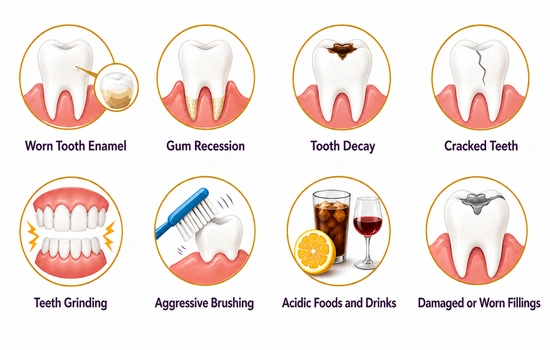
Tooth sensitivity can happen when the protective layer of the tooth becomes weak or when the gums move away from the tooth roots. In some cases, sensitivity may also be a warning sign of cavities, cracked teeth, worn enamel, or other dental problems.
Understanding the cause is important because the right treatment depends on what is making your teeth sensitive. Below are some common reasons why tooth sensitivity may happen.
Worn Tooth Enamel
Enamel is the hard outer layer that protects your teeth from daily pressure, temperature changes, and food acids. When enamel becomes thin or damaged, the softer inner layer of the tooth can become exposed, which may lead to sensitivity.
Enamel wear can happen because of:
- Acidic foods and drinks
- Soft drinks
- Brushing too hard
- Teeth grinding
- Poor oral hygiene
- Frequent sugary snacks
Once enamel is lost, it does not grow back naturally. This is why protecting enamel early is important for reducing sensitivity and preventing further tooth damage.
Gum Recession
Gum recession happens when the gums move away from the tooth and expose the root surface. Tooth roots do not have the same strong enamel protection as the visible part of the tooth, so they can become sensitive more easily.
Gum recession may be caused by:
- Gum disease
- Aggressive brushing
- Ageing
- Poor oral hygiene
- Teeth grinding
- Plaque buildup around the gum line
When the roots are exposed, you may feel sensitivity while drinking cold water, brushing, or even breathing in cold air. Early gum care can help prevent the condition from becoming worse.
Tooth Decay
Tooth decay is another common cause of tooth sensitivity. When a cavity damages the tooth surface, it can expose deeper layers and make the tooth react to hot, cold, sweet, or acidic foods.
You may notice sensitivity along with:
- Tooth pain
- Dark spots on the tooth
- Food getting stuck in one area
- Bad breath
- Pain while chewing
If sensitivity is caused by decay, a dental filling may help restore the tooth and stop further damage. Treating decay early can also prevent infection and more complex dental treatment later.
Cracked Teeth
A cracked tooth can allow temperature changes, food particles, or bacteria to reach deeper parts of the tooth. This can cause sensitivity, pain while chewing, or discomfort that comes and goes.
Cracked teeth may happen due to:
- Biting hard foods
- Teeth grinding
- Injury or trauma
- Large old fillings
- Weak tooth structure
Even a small crack can become worse if ignored. A dentist can check the tooth and suggest the right treatment before the damage spreads.
Teeth Grinding
Teeth grinding, also called bruxism, can slowly wear down the enamel and make teeth more sensitive. Many people grind or clench their teeth during sleep and may not realise it.
Common signs of teeth grinding include:
- Morning jaw pain
- Headaches after waking up
- Worn or flattened teeth
- Tooth sensitivity
- Tightness around the jaw
- Pain while chewing
If grinding is the cause, a dentist may recommend a night guard or other treatment to protect your teeth from further wear.
Aggressive Brushing
Brushing is important, but brushing too hard can damage the enamel and irritate the gums. Over time, this can expose sensitive areas near the gum line and cause discomfort.
Aggressive brushing may happen when you:
- Use a hard bristle toothbrush
- Brush with too much pressure
- Scrub side to side harshly
- Brush for too long in one area
Using a soft bristle toothbrush and gentle circular movements can help clean your teeth without damaging enamel or gums.
Acidic Foods and Drinks
Frequent intake of acidic foods and drinks can weaken enamel and increase the risk of tooth sensitivity. Acid softens the enamel surface, making it easier for damage to happen over time.
Common acidic items include:
- Soft drinks
- Citrus fruits
- Vinegar based foods
- Sour candies
- Sports drinks
- Fruit juices
You do not need to avoid all acidic foods completely, but reducing how often you consume them can help.
Damaged or Worn Fillings
Old, loose, or damaged fillings can also cause tooth sensitivity. If a filling no longer seals the tooth properly, bacteria and temperature changes can reach the inner layers of the tooth.
Signs of a damaged filling may include:
- Sensitivity in one tooth
- Pain while chewing
- Food getting stuck around the filling
- Rough or broken filling surface
- Discomfort with hot or cold foods
A dentist can check the filling and repair or replace it if needed.
Tooth sensitivity can have many causes, including enamel wear, gum recession, tooth decay, cracked teeth, grinding, aggressive brushing, acidic foods, or damaged fillings. Because the cause is not always easy to identify at home, a professional checkup can help find the real problem and guide the right treatment.
Signs Your Tooth Sensitivity Needs Dental Attention
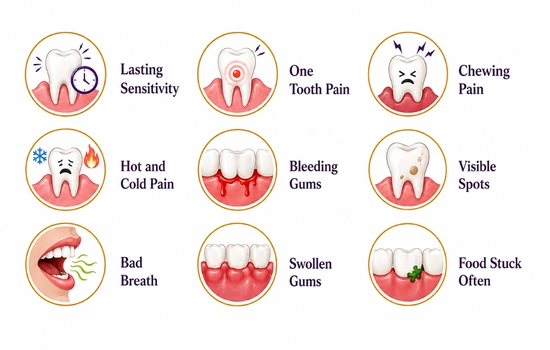
Sensitivity can sometimes be linked to tooth decay, gum recession, cracked teeth, damaged fillings, or infection. Getting it checked early can help prevent the problem from becoming worse.
- Lasting Sensitivity: If sensitivity continues for several days or weeks, it may indicate enamel damage, gum recession, tooth decay, or another deeper dental issue.
- One Tooth Pain: Sensitivity in only one tooth may be a sign of a cavity, crack, damaged filling, or infection in that specific tooth.
- Chewing Pain: Pain while biting or chewing can suggest tooth damage, a cracked tooth, decay, or pressure on the inner part of the tooth.
- Hot and Cold Pain: Sensitivity to both hot and cold foods or drinks may need professional examination, especially if the pain stays for more than a few seconds.
- Bleeding Gums: Sensitivity with bleeding gums may be connected to gum disease, gum recession, or plaque buildup around the gum line.
- Visible Spots: Brown, black, or white spots on the tooth may be signs of tooth decay, enamel weakness, or early cavity formation.
- Bad Breath: Sensitivity along with bad breath can sometimes indicate plaque buildup, gum problems, tooth decay, or infection.
- Swollen Gums: Swelling around a sensitive tooth may be a sign of gum infection or a dental problem that needs attention.
- Food Stuck Often: If food keeps getting trapped around the same tooth, it may be due to a cavity, gap, crack, or damaged filling.
Early care can help protect your tooth, reduce discomfort, and prevent more complex treatment later.
Tooth Sensitivity Treatment Options
A dentist can check your teeth, gums, and enamel condition to understand why sensitivity is happening. Once the cause is clear, the right treatment can help reduce pain, protect the tooth, and prevent the problem from getting worse.
| Treatment Option | How It Helps |
| Desensitising Toothpaste | Desensitising toothpaste can help reduce mild sensitivity over time. It works by helping block the tiny pathways that lead to the tooth nerves. This is useful for mild sensitivity caused by exposed dentin or minor enamel wear, but it may take a few weeks of regular use to show results. |
| Fluoride Treatment | Fluoride helps strengthen tooth enamel and makes teeth more resistant to acid attacks. A dentist may recommend fluoride treatment if your enamel is weak or if you are at higher risk of cavities. It can help reduce sensitivity and support better tooth protection. |
| Dental Filling | If sensitivity is caused by a cavity, the decayed part of the tooth needs to be treated. A dental filling can help restore the damaged tooth, cover exposed areas, and stop decay from spreading further. |
| Gum Care Treatment | If gum recession or gum disease is causing sensitivity, gum care may be needed. Treatment may focus on removing plaque, reducing gum inflammation, and protecting exposed tooth roots. |
| Cleaning & Prevention | Regular cleaning & prevention care can help remove plaque and tartar buildup that may irritate gums and contribute to sensitivity. It also supports better gum health and helps reduce the risk of future dental problems. |
| Night Guard | If teeth grinding is wearing down the enamel, a dentist may recommend a night guard. It helps protect the teeth from grinding pressure during sleep and can reduce enamel wear, jaw discomfort, and sensitivity over time. |
| Cracked Tooth Repair | If a cracked or damaged tooth is causing sensitivity, the dentist will check how deep the crack is and suggest suitable treatment. Early repair can help stop the crack from spreading and protect the tooth from further damage. |
Why Diagnosis Matters
Tooth sensitivity can feel similar in many cases, but the cause may be different for each person. For example, sensitivity from enamel wear may need fluoride or sensitivity toothpaste, while sensitivity from decay may need a dental filling.
Using home remedies or mouthwash may only give temporary relief if the real problem is a cavity, gum recession, or cracked tooth. A proper dental examination helps find the cause and choose the most effective treatment.
Tooth sensitivity treatment works best when the cause is properly identified. If sensitivity continues, becomes painful, or affects your daily eating and drinking, professional dental advice can help you get the right treatment and protect your teeth from further damage.
Home Care Tips to Reduce Tooth Sensitivity
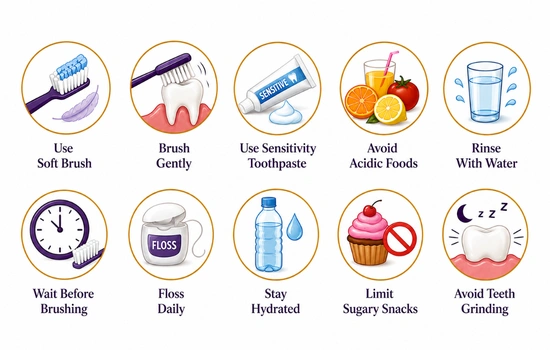
Home care can support mild sensitivity, but it should not replace professional dental care if the pain is severe, frequent, or keeps coming back.
- Use Soft Brush: A soft bristle toothbrush is gentle on your enamel and gums. It helps clean your teeth properly without causing extra wear or irritation.
- Brush Gently: Avoid brushing with too much pressure because it can damage enamel and push the gums back. Use gentle circular movements instead of harsh scrubbing.
- Use Sensitivity Toothpaste: Toothpaste made for sensitive teeth can help reduce discomfort over time. Use it consistently for a few weeks to get better results.
- Avoid Acidic Foods: Soft drinks, sour candies, citrus fruits, and vinegar based foods can weaken enamel. Reducing these items can help protect your teeth from sensitivity.
- Rinse With Water: After eating acidic or sugary foods, rinse your mouth with water. This helps reduce acid contact and washes away food particles.
- Wait Before Brushing: Do not brush immediately after acidic foods or drinks because enamel may be softer at that time. Wait around 30 minutes before brushing.
- Floss Daily: Flossing removes plaque and food particles from between the teeth. This helps protect the gums and lowers the risk of decay related sensitivity.
- Stay Hydrated: Drinking enough water supports saliva flow and helps keep the mouth clean naturally. It also reduces dryness, which can make sensitivity worse.
- Limit Sugary Snacks: Sugary foods feed bacteria in the mouth and increase the risk of cavities. Reducing frequent sugar intake can help protect sensitive teeth.
- Avoid Teeth Grinding: If you grind or clench your teeth, it can wear down enamel and increase sensitivity. A dentist can suggest suitable protection if grinding is a concern.
If sensitivity does not improve or becomes painful, a dentist can check whether the cause is enamel wear, gum recession, tooth decay, or another dental issue.
How to Prevent Tooth Sensitivity
The main goal is to keep the protective layers of your teeth strong and prevent the inner tooth surface from becoming exposed.
- Maintain Oral Hygiene: Brush twice a day and floss daily to remove plaque, food particles, and bacteria. This helps reduce the risk of cavities, gum problems, and sensitivity.
- Use Fluoride Toothpaste: Fluoride helps strengthen tooth enamel and protect teeth from acid attacks. Using fluoride toothpaste daily can lower the risk of enamel wear and tooth decay.
- Avoid Hard Brushing: Brushing too hard can wear down enamel and push the gums back. Use a soft toothbrush and gentle circular movements to protect your teeth and gums.
- Limit Acidic Foods: Soft drinks, citrus fruits, sour candies, and vinegar based foods can weaken enamel over time. Reducing frequent intake can help protect your teeth from sensitivity.
- Treat Cavities Early: Small cavities can become deeper if ignored and may lead to sensitivity or pain. Early treatment can stop decay before it damages the inner tooth layers.
- Manage Grinding: Teeth grinding can slowly wear down enamel and make teeth sensitive. If you grind or clench your teeth, ask your dentist about suitable protection options.
- Visit Dentist Regularly: Regular dental visits help detect early signs of enamel wear, cavities, gum recession, and other oral health problems. Early care can prevent sensitivity from becoming worse.
With good oral hygiene, gentle brushing, fluoride toothpaste, healthy food habits, and regular dental care, you can keep your teeth stronger, more comfortable, and better protected from sensitivity.
Conclusion
Tooth sensitivity can happen due to enamel wear, gum recession, cavities, cracked teeth, teeth grinding, or poor oral habits. While mild sensitivity may seem manageable at first, repeated discomfort should not be ignored because it can be a sign of a deeper dental concern.
If you are experiencing tooth sensitivity while eating, drinking, or brushing, contact Sandringham Dental for professional advice and suitable treatment. Early care can help protect your teeth, reduce discomfort, and prevent further damage. You can also book an appointment to get your teeth checked and take the right step towards better oral health.