
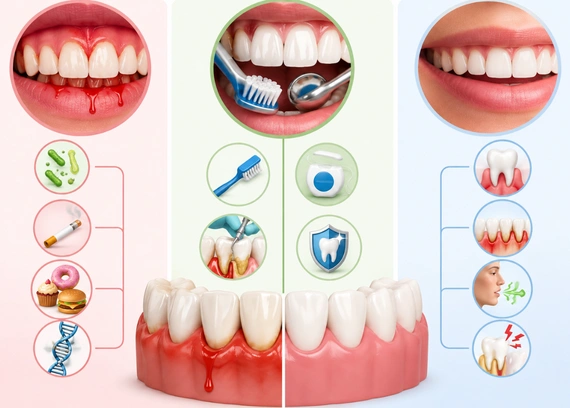
Have you ever noticed blood on your toothbrush or in the sink after brushing and wondered if it was something to worry about?
Many people experience bleeding gums occasionally and assume it is normal, especially when there is little or no pain. However, healthy gums should not bleed regularly. In many cases, bleeding gums are one of the earliest warning signs that your gums need attention, even before other symptoms become noticeable.
Bleeding gums can be caused by plaque buildup, poor oral hygiene, aggressive brushing, or the early stages of gum disease. While the problem may seem minor at first, ignoring it can allow the condition to worsen over time and affect the health of your teeth and gums. The good news is that most causes of bleeding gums can be treated and prevented with the right care. Understanding the possible reasons behind bleeding gums is the first step towards protecting your smile and maintaining better oral health.
What Are Bleeding Gums?
Bleeding gums occur when the gum tissue becomes irritated, inflamed, or damaged. You may notice blood while brushing your teeth, flossing, eating certain foods, or sometimes even without an obvious reason. While occasional irritation can happen, gums that bleed regularly are often a sign that something is affecting your oral health.
Healthy gums should appear firm, pink, and fit closely around the teeth without bleeding during normal oral care. When plaque and bacteria build up along the gum line, the gums can become inflamed and more likely to bleed. Identifying the cause early can help prevent further gum problems and protect the health of your teeth and gums.
Common Signs That May Accompany Bleeding Gums
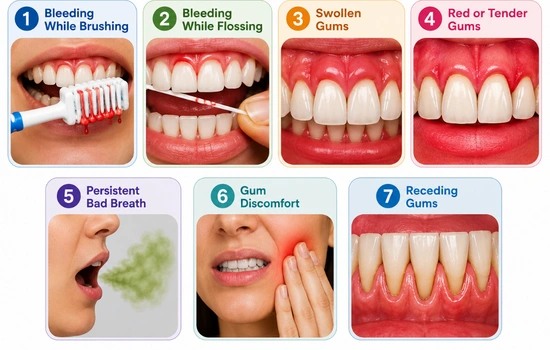
- Bleeding While Brushing: If your gums bleed regularly while brushing, it may be a sign of irritation, plaque buildup, or early gum disease.
- Bleeding While Flossing: Occasional bleeding can happen when starting to floss, but frequent bleeding may indicate inflamed or unhealthy gums.
- Swollen Gums: Gums that appear puffy or enlarged are often a sign of inflammation caused by bacteria and plaque accumulation.
- Red or Tender Gums: Healthy gums are usually pink. Redness, tenderness, or soreness can indicate that the gums need attention.
- Persistent Bad Breath: Ongoing bad breath may be linked to bacteria buildup and gum problems that require proper treatment.
- Gum Discomfort: Sensitive or uncomfortable gums can be an early sign of irritation or developing gum disease.
- Receding Gums: Gums that are pulling away from the teeth can expose tooth roots and increase the risk of sensitivity and dental problems.
Bleeding gums are often one of the earliest signs that your gums need attention. Identifying the cause early can help prevent more serious oral health problems later.
Common Causes of Bleeding Gums
In many cases, the problem develops gradually, which means people may not notice any major symptoms until their gums start bleeding during brushing or flossing.
Understanding the cause of bleeding gums is important because the right treatment depends on what is affecting your gum health. Identifying the problem early can help prevent more serious dental complications in the future.
Plaque Buildup
Plaque is a sticky layer of bacteria that forms on the teeth every day. When plaque is not removed properly through brushing and flossing, it can build up along the gum line and irritate the surrounding gum tissue.
Common effects of plaque buildup include:
- Gum inflammation
- Swelling around the gums
- Redness
- Bleeding during brushing
- Increased risk of gum disease
Regular teeth cleaning can help remove plaque and reduce irritation before it progresses into more serious gum problems.
Gum Disease
Gum disease is one of the most common causes of bleeding gums. It often begins as gingivitis, an early stage of gum disease that causes redness, swelling, and bleeding. Because gingivitis may not cause pain, many people ignore the symptoms.
If left untreated, gum disease can progress and affect the tissues and bone that support the teeth. This can increase the risk of tooth loss and other oral health problems.
Signs of gum disease may include:
- Bleeding gums
- Persistent bad breath
- Swollen or tender gums
- Gum recession
- Loose teeth in advanced stages
Early treatment can help control gum disease and protect your long term oral health.
Poor Oral Hygiene
Poor oral hygiene allows bacteria and food particles to remain in the mouth for longer periods. Over time, this encourages plaque buildup and increases the risk of gum irritation and bleeding.
Common oral hygiene habits that may contribute to bleeding gums include:
- Inconsistent brushing
- Not flossing regularly
- Skipping dental checkups
- Not cleaning along the gum line
Maintaining good oral hygiene is one of the most effective ways to prevent bleeding gums and support healthier teeth and gums.
Aggressive Brushing
Brushing your teeth is important, but brushing too hard can damage the delicate gum tissue. Using excessive pressure or a hard bristle toothbrush may cause irritation and bleeding.
To protect your gums:
- Use a soft bristle toothbrush
- Brush gently using circular motions
- Avoid scrubbing aggressively
- Replace worn toothbrushes regularly
A gentle brushing technique can clean your teeth effectively without harming your gums.
Smoking and Tobacco Use
Smoking and tobacco use can have a negative impact on gum health. Tobacco products increase the risk of gum disease and may reduce the body’s ability to heal damaged gum tissue.
Smoking may also:
- Increase plaque buildup
- Reduce blood flow to the gums
- Delay healing after dental treatment
- Increase the risk of gum infections
Quitting smoking can significantly improve both oral health and overall wellbeing.
Vitamin Deficiencies
Certain vitamins play an important role in maintaining healthy gums. A deficiency in nutrients such as Vitamin C can weaken gum tissue and make gums more likely to bleed.
Signs that may be linked to nutritional deficiencies include:
- Sensitive gums
- Frequent gum bleeding
- Slow healing
- Increased gum irritation
Eating a balanced diet with plenty of fruits, vegetables, and nutrient rich foods can help support healthier gums.
Understanding the cause is the first step towards protecting your gums, improving your oral health, and preventing long term dental problems.
Signs That Bleeding Gums May Be a Serious Problem
Recognising these warning signs early can help prevent further damage to your gums and support more effective treatment.
- Bleeding Every Time You Brush: Frequent bleeding during brushing may indicate ongoing gum inflammation or gum disease.
- Swollen or Puffy Gums: Gums that appear enlarged or swollen are often a sign of irritation and infection.
- Bright Red Gums: Healthy gums are usually pink. Bright red gums may indicate inflammation and poor gum health.
- Persistent Bad Breath: Ongoing bad breath can be linked to bacteria buildup and underlying gum problems.
- Gum Recession: Gums that are pulling away from the teeth may expose tooth roots and increase sensitivity.
- Loose Teeth: Teeth that feel loose or shift position may indicate advanced gum disease affecting the supporting structures.
- Pain While Chewing: Discomfort while eating or chewing can suggest gum infection or other dental concerns.
- Pus Around the Gums: Pus near the gums is a sign of infection and should be checked by a dentist as soon as possible.
If you notice any of these symptoms, a professional dental checkup can help determine the cause and prevent the condition from worsening.
How to Prevent Bleeding Gums

The key to prevention is maintaining good oral hygiene, controlling plaque buildup, and addressing dental concerns before they become more serious.
- Brush Gently Twice Daily: Brush your teeth morning and night using a soft bristle toothbrush. Gentle brushing helps remove plaque without damaging the gums.
- Floss Every Day: Flossing removes food particles and plaque from between the teeth where a toothbrush cannot reach, helping to keep the gums healthier.
- Schedule Regular Dental Visits: Routine dental examinations can help identify early signs of gum problems before they become more difficult to treat.
- Remove Plaque Buildup Early: Plaque is one of the leading causes of gum irritation. Removing it regularly helps reduce inflammation and bleeding.
- Eat a Balanced Diet: Nutrient rich foods support healthy gums and help your body fight inflammation and infection.
- Stay Hydrated: Drinking enough water helps wash away food particles and supports saliva production, which protects the mouth naturally.
- Avoid Tobacco Products: Smoking and tobacco use can increase the risk of gum disease and slow the healing process of gum tissue.
Regular teeth cleaning can also help prevent plaque and tartar from causing gum irritation and long term gum problems.
When Should You See a Dentist?
A dentist can identify the cause of the problem, assess the condition of your gums, and recommend the most suitable treatment before the condition becomes more serious.
- Bleeding Continues for Several Days: Ongoing bleeding may indicate gum inflammation or the early stages of gum disease.
- Your Gums Are Swollen or Painful: Swelling, tenderness, or discomfort can be a sign that your gums are irritated or infected.
- You Have Bad Breath That Does Not Improve: Persistent bad breath may be linked to plaque buildup, bacteria, or gum disease.
- Your Gums Are Receding: Gums that are pulling away from the teeth can expose tooth roots and increase the risk of sensitivity and other dental problems.
- Your Teeth Feel Loose: Loose teeth may indicate advanced gum disease affecting the structures that support the teeth.
- You Have Not Had a Dental Visit in a Long Time: Regular dental examinations help identify gum problems before they become more difficult to treat.
A professional dental checkup can help identify hidden issues, detect early signs of gum disease, and protect your long term oral health.
Conclusion
Bleeding gums should never be ignored, even if the problem seems minor. They are often an early warning sign that your gums need attention. With proper oral hygiene, regular dental care, and early treatment, most causes of bleeding gums can be managed effectively before they become serious.If you are experiencing bleeding gums, swelling, or ongoing gum discomfort, contact Sandringham Dental for professional advice and personalised care. You can also make an appointment to have your gums examined and receive the right treatment to protect your long term oral health.