

Dental implants are one of the most effective and long-lasting solutions for replacing missing teeth. They look, feel, and function like natural teeth by acting as artificial tooth roots that securely fuse with the jawbone. This not only restores your ability to eat and speak comfortably but also helps maintain your facial structure and gives you the confidence to smile again. While dental implant surgery has a high success rate, following the right recovery and aftercare plan is essential for achieving the best results.
A smooth dental implant depends on proper care before and after the procedure. Simple steps such as taking prescribed medications, eating soft foods, maintaining good oral hygiene, and attending follow-up appointments can speed up healing and reduce the risk of complications.
Is Pain After Dental Implant Surgery Normal?
Yes, experiencing mild pain after dental implant surgery is completely normal. Since the procedure involves placing a titanium implant into the jawbone, it is common to experience some discomfort, swelling, and tenderness as your mouth begins to heal. Most patients notice these symptoms during the first 24 to 72 hours, and they gradually improve over the following few days with proper care.
During the procedure, your dentist uses local anesthesia to ensure you don’t feel pain while the implant is being placed. After the anesthesia wears off, you may experience mild soreness around the implant site. Patients receiving multiple implants or full-mouth dental implants may have slightly more discomfort than those receiving a single implant, but this is usually temporary and manageable with prescribed medications and proper aftercare.
What Causes Pain During Dental Implant Recovery?
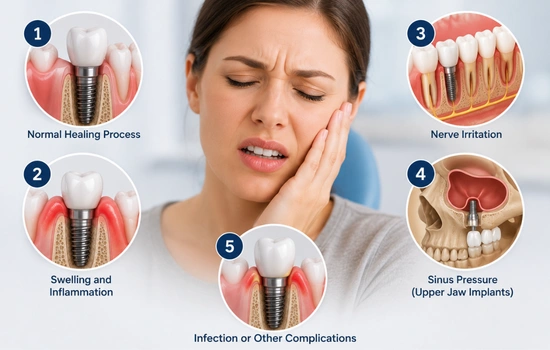
Mild pain and discomfort after dental implant surgery are a normal part of the healing process. As your gums and jawbone recover, your body begins repairing the treated area and integrating the implant with the bone. While most discomfort improves within a few days, understanding the possible causes of pain can help you identify what is normal and when to seek professional advice.
1. Normal Healing Process
The most common cause of pain after dental implant surgery is the body’s natural healing response. During the procedure, the dentist makes a small incision in the gum and carefully places the implant into the jawbone. As the tissues heal, it’s normal to experience mild pain, swelling, tenderness, and slight bruising. These symptoms are usually most noticeable during the first 24–72 hours and gradually improve with proper care.
2. Swelling and Inflammation
Swelling is a natural reaction after any surgical procedure. It typically peaks within the first two days before slowly subsiding. Mild inflammation around the implant site may also cause tenderness and discomfort. Applying a cold compress and taking prescribed medications can help reduce swelling and ease pain.
3. Nerve Irritation
In rare cases, the implant may be placed close to a nerve, causing temporary nerve irritation. This can result in sharp pain, tingling, numbness, or a burning sensation around the lips, chin, or gums. If these symptoms persist or worsen, contact your dentist immediately for evaluation.
4. Sinus Pressure (Upper Jaw Implants)
For implants placed in the upper jaw, the implant site may be close to the sinus cavity. Some patients may experience mild sinus pressure or discomfort during recovery, especially if additional procedures such as a sinus lift were required. This usually improves as healing progresses but should be assessed if it becomes severe.
5. Infection or Other Complications
Although uncommon, infection around the implant site can cause increasing pain, swelling, redness, pus, or fever. Pain that becomes more severe instead of improving after several days may indicate a complication. Seeking prompt dental care can help prevent further issues and protect the long-term success of your implant.
How to Relieve Pain After Dental Implant Surgery

Recovering from dental implant surgery takes time, but following the right aftercare routine can help reduce pain, speed up healing, and improve the long-term success of your implant. Follow these 10 expert tips for a smooth and comfortable recovery.
1. Take Your Medications as Prescribed
Your dentist may prescribe pain relievers, anti-inflammatory medication, or antibiotics after surgery. Take them exactly as directed to control pain, reduce swelling, and lower the risk of infection. Avoid skipping doses, even if you start feeling better.
2. Apply a Cold Compress
A cold compress helps reduce swelling and numb the treated area. Place an ice pack on the outside of your cheek for 20 minutes, then remove it for 20 minutes. Repeat this during the first 24–48 hours after surgery for the best results.
3. Eat Soft and Nutritious Foods
Choose soft foods such as yogurt, mashed potatoes, scrambled eggs, smoothies, oatmeal, and soups. Avoid hard, crunchy, spicy, or very hot foods that could irritate the implant site and slow the healing process.
4. Keep the Implant Area Clean
Good oral hygiene is essential for preventing infection. Brush your teeth gently while avoiding the surgical area during the first few days. Use a warm saltwater rinse or any medicated mouthwash recommended by your dentist to keep your mouth clean.
5. Get Plenty of Rest
Your body heals faster when it gets enough rest. Avoid strenuous exercise, heavy lifting, and intense physical activity for at least a few days after surgery, as these activities may increase bleeding and swelling.
6. Keep Your Head Elevated
Sleep with your head slightly raised using an extra pillow during the first few nights. This helps reduce swelling, improves blood circulation, and minimizes discomfort while you rest.
7. Avoid Smoking and Alcohol
Smoking slows healing by reducing blood flow to the gums, while alcohol can interfere with medications and delay recovery. Avoid both for at least two weeks or until your dentist advises it’s safe.
8. Stay Hydrated
Drink plenty of water throughout the day to support your body’s natural healing process. Avoid carbonated drinks, alcohol, and using straws, as the suction may disturb the healing tissues around the implant.
9. Attend All Follow-Up Appointments
Regular follow-up visits allow your dentist to monitor healing, check implant stability, and address any concerns before they become serious problems. Never skip your scheduled appointments.
10. Watch for Warning Signs
Mild discomfort is normal, but severe pain, excessive swelling, persistent bleeding, fever, pus, or a loose implant may indicate a complication. Contact your dentist immediately if you notice any of these symptoms to ensure prompt treatment.
Why Is Aftercare Important for Dental Implants?
Proper aftercare is essential for a successful dental implant recovery. Following your dentist’s instructions helps reduce pain, prevent complications, and ensure your implant heals properly. Good aftercare also improves the long-term success of your dental implant and helps you maintain a healthy smile.
Reduces Pain and Swelling: Proper aftercare helps minimize discomfort, swelling, and tenderness after dental implant surgery, making your recovery more comfortable.
Promotes Faster Healing: Following the recommended recovery guidelines supports the natural healing process and helps your gums and jawbone heal more quickly.
Prevents Infection: Keeping the implant area clean and maintaining good oral hygiene reduces the risk of infection and other complications.
Supports Implant Stability: Proper aftercare helps the implant fuse securely with the jawbone, improving its strength and long-term stability.
Reduces the Risk of Implant Failure: Following your dentist’s advice lowers the chances of implant complications and increases the success of your treatment.
Protects Your Oral Health: Healthy gums and surrounding teeth provide better support for your implant and help maintain overall oral health.
Ensures Long-Term Success: Regular dental check-ups and proper care help keep your dental implant healthy and functioning well for many years.
When Should You Contact Your Dentist?
Mild pain, swelling, and discomfort are common after dental implant surgery and usually improve within a few days. However, some symptoms may indicate a complication that requires immediate dental attention. Contact your dentist if you notice any of the following:
Severe or Worsening Pain: Pain that becomes more intense or does not improve after several days should be evaluated by your dentist.
Persistent Swelling: Swelling that continues to increase or lasts longer than a week may be a sign of infection or delayed healing.
Excessive Bleeding: Slight bleeding is normal after surgery, but continuous or heavy bleeding requires immediate dental care.
Pus or Discharge: Any pus, bad taste, or unusual discharge around the implant site may indicate an infection.
Fever: A fever after dental implant surgery can be a sign that your body is fighting an infection and should not be ignored.
Loose Implant: A dental implant should remain stable during healing. If it feels loose or moves when you bite or touch it, contact your dentist as soon as possible.
Difficulty Chewing or Persistent Numbness: Ongoing numbness, tingling, or difficulty chewing may indicate nerve irritation or another complication that needs professional evaluation.
Long-Term Care for Dental Implants
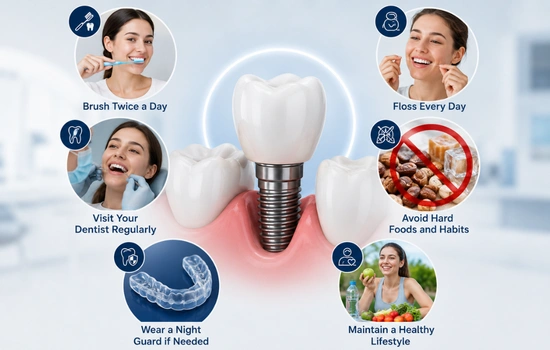
Proper care doesn’t stop once your dental implant has healed. Maintaining good oral hygiene and healthy lifestyle habits can help protect your implant and keep it functioning for many years. Follow these simple tips to ensure long-term dental implant success.
Brush Twice a Day: Brush your teeth twice daily using a soft-bristled toothbrush and fluoride toothpaste to remove plaque and keep your implant and gums healthy.
Floss Every Day: Clean between your teeth and around your implant with dental floss or interdental brushes to prevent plaque buildup and gum disease.
Visit Your Dentist Regularly: Schedule regular dental check-ups and professional cleanings to monitor your implant and maintain your overall oral health.
Avoid Hard Foods and Habits: Don’t chew on ice, hard candies, or use your teeth to open packages, as this can damage your implant or restoration.
Wear a Night Guard if Needed: If you grind or clench your teeth while sleeping, your dentist may recommend a night guard to protect your implant from excessive pressure.
Maintain a Healthy Lifestyle: Eat a balanced diet, stay hydrated, and avoid smoking to support healthy gums and improve the longevity of your dental implant.
Conclusion
Dental implant surgery is a proven and long-lasting solution for restoring missing teeth, but proper recovery and aftercare are essential for achieving the best results. By following your dentist’s instructions, maintaining good oral hygiene, managing pain appropriately, and attending regular follow-up appointments, you can promote faster healing, reduce the risk of complications, and enjoy a healthy, confident smile for years to come.
If you’re considering dental implants or have questions about your recovery, our experienced dental team is here to provide personalized care and support every step of the way. Book an appointment today to discuss your treatment options or schedule a follow-up consultation and take the next step toward a stronger, healthier smile.