

Bad breath can make simple conversations feel uncomfortable, especially when you are speaking closely with someone at work, with friends, or in public. Many people try mouthwash, chewing gum, or brushing again, but the smell often comes back after some time. When this happens regularly, it can affect your confidence and make you worry before every conversation.
The good news is that bad breath can usually be treated once the real cause is found. It may be due to food, plaque buildup, gum problems, tooth decay, dry mouth, or poor oral hygiene. If bad breath continues even after regular brushing, a professional dental checkup can help identify the cause and guide you towards the right bad breath treatment.
What Is Bad Breath?
Bad breath, also known as mouth odour, is an unpleasant smell that comes from the mouth. It can happen for simple reasons like eating strong smelling foods, but when it continues for a long time or keeps coming back, it may be a sign of an oral health problem.
Temporary bad breath usually improves after brushing, drinking water, or cleaning the mouth properly. Persistent bad breath is different because it does not go away easily and may need proper dental attention.
Temporary Bad Breath
Temporary bad breath is usually short term and often caused by food or drink choices. It may happen after eating garlic, onion, spicy meals, or drinking coffee.
Common causes include:
- Garlic or onion
- Spicy foods
- Coffee
- Dry mouth after sleeping
- Not drinking enough water
This type of bad breath usually improves after brushing, rinsing the mouth, or drinking water. It is generally not a serious concern unless it happens often or does not improve with normal oral care.
Persistent Bad Breath
Persistent bad breath is more concerning because it keeps returning even after brushing or using mouthwash. In many cases, the cause may be deeper than food smell and may be linked to dental or gum problems.
Common causes include:
- Plaque buildup
- Gum disease
- Tooth decay
- Dry mouth
- Bacteria on the tongue
- Food trapped between teeth
- Dental infections
Bad breath is not always just a temporary issue caused by food. If it keeps coming back, finding the root cause is the first step towards proper treatment and better oral health.
Common Causes of Bad Breath
Bad breath can happen for many reasons, and it is not always caused by food. In many cases, the smell comes from bacteria, plaque, gum problems, or dryness inside the mouth.
Poor Oral Hygiene
Poor oral hygiene is one of the most common reasons for bad breath. When teeth are not cleaned properly, small food particles can stay between the teeth, on the tongue, and around the gum line. These particles allow bacteria to grow, and this bacteria can create an unpleasant smell in the mouth.
Bad breath caused by poor oral hygiene often becomes worse when brushing and flossing are not done regularly. Plaque can also build up on the teeth, which may lead to gum irritation, tooth decay, and stronger mouth odour over time.
Common hygiene habits that may cause bad breath include:
- Not brushing twice a day
- Skipping flossing
- Not cleaning the tongue
- Leaving food particles between teeth
- Not replacing an old toothbrush
- Missing regular dental cleanings
Plaque and Tartar Buildup
Plaque is a sticky layer of bacteria that forms on the teeth throughout the day. If it is not removed with proper brushing and flossing, it can harden into tartar, which cannot be cleaned at home with a normal toothbrush.
Common signs of plaque or tartar buildup include:
- Yellow or brown deposits on teeth
- Bad breath that keeps returning
- Bleeding gums while brushing
- Rough feeling on the teeth
- Swollen or irritated gums
Gum Disease
Gum disease is a common dental reason for persistent bad breath. It usually starts when plaque and bacteria build up around the gum line, causing irritation, swelling, and bleeding. As the condition progresses, bacteria can collect deeper around the teeth and create a stronger mouth odour.
If gum disease is not treated early, it can damage the gums and the support around the teeth. This may lead to loose teeth, gum recession, and more serious oral health problems over time.
- Bleeding gums
- Swollen or red gums
- Gum tenderness
- Bad breath that does not improve
- Receding gums
Tooth Decay
Tooth decay can also cause bad breath because cavities may trap food particles and bacteria. In the early stages, a decayed tooth may not always cause pain, but the smell can be an early warning sign that something is wrong.
As the cavity becomes deeper, bacteria can continue to grow inside the damaged area. This can lead to stronger mouth odour, tooth sensitivity, pain, or infection if left untreated.
Common signs of tooth decay include:
- Bad smell from one area of the mouth
- Tooth sensitivity
- Pain while eating sweet foods
- Visible holes or dark spots on teeth
- Food getting stuck in the same tooth
- Toothache in later stages
Dry Mouth
Saliva helps keep the mouth clean by washing away food particles and controlling bacteria. When the mouth becomes dry, bacteria can grow more easily and cause bad breath. This is why many people notice stronger mouth odour in the morning or when they have not had enough water.
Dry mouth can happen for many reasons, and it may become a regular problem if the cause is not addressed.
Common causes of dry mouth include:
- Dehydration
- Mouth breathing
- Certain medicines
- Smoking or tobacco use
- Health conditions
- Sleeping with the mouth open
- Drinking too much coffee or alcohol
Bad breath can have several causes, but most are linked to bacteria, gum health, or poor cleaning in hard to reach areas. Treating the cause is more effective than only masking the smell.
Bad Breath Treatment Options
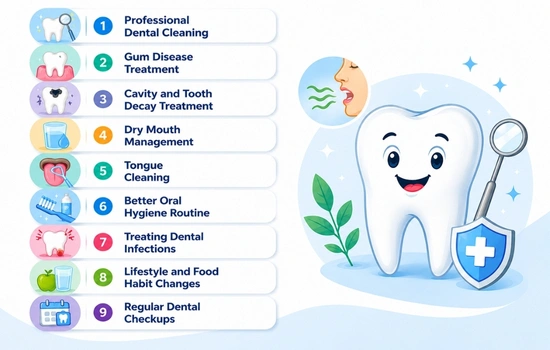
The right bad breath treatment depends on the real reason behind the smell. Bad breath is not always caused by food. In many cases, it comes from bacteria, plaque buildup, gum disease, tooth decay, dry mouth, tongue coating, or dental infections. This is why chewing gum, mouth fresheners, or mouthwash may only hide the smell for a short time.
Professional Dental Cleaning
Professional dental cleaning is one of the most effective treatments when bad breath is caused by plaque and tartar buildup. Even if you brush your teeth daily, some areas of the mouth are difficult to clean properly at home. Food particles and bacteria can stay between the teeth, behind the back teeth, and around the gum line.
Over time, plaque can harden into tartar. Once tartar forms, it cannot be removed with normal brushing. It needs to be removed professionally using dental instruments. If tartar stays around the gum line, it can irritate the gums and create a place where bacteria continue to grow.
Professional cleaning helps by:
- Removing plaque from the teeth
- Removing hardened tartar
- Cleaning areas that brushing cannot reach
- Reducing bacteria around the gum line
- Improving gum health
- Helping the mouth feel cleaner and fresher
This treatment is especially helpful if your bad breath keeps coming back even after brushing. It may also help if your gums bleed, your teeth feel rough, or you can see yellow or brown buildup on your teeth.
Regular professional cleaning also helps prevent gum disease, cavities, and future oral health problems.
Gum Disease Treatment
Gum disease is a common cause of persistent bad breath. It usually starts when plaque and bacteria collect around the gum line. In the early stage, the gums may become red, swollen, or bleed while brushing. Many people ignore these signs because there may not be much pain in the beginning.
As gum disease becomes worse, bacteria can move deeper below the gum line. This can create pockets around the teeth where bacteria collect. These bacteria can produce a strong unpleasant smell and may also damage the tissues that support the teeth.
Gum disease treatment may include professional cleaning, deep cleaning, and advice on better gum care at home. The goal is to remove bacteria, reduce inflammation, and stop the condition from getting worse.
You may need gum disease treatment if you notice:
- Bleeding gums
- Swollen gums
- Red or tender gums
- Bad breath that does not improve
- Bad taste in the mouth
- Receding gums
- Loose teeth
- Pain while chewing
Treating gum disease early can help improve breath freshness and protect your teeth from long term damage. If gum disease is ignored, it may lead to tooth loss in serious cases.
Cavity and Tooth Decay Treatment
Tooth decay can also cause bad breath. When a cavity forms, it can trap food particles and bacteria inside the damaged area of the tooth. These bacteria can create an unpleasant smell, even if the tooth does not hurt at first.
In the early stages, tooth decay may not cause obvious pain. Some people only notice food getting stuck in the same tooth or a bad smell coming from one area of the mouth. As the decay becomes deeper, it may lead to sensitivity, toothache, or infection.
Cavity treatment usually involves cleaning out the decayed part of the tooth and restoring it. This helps remove the bacteria and prevents the cavity from becoming larger.
Cavity treatment may be needed if you notice:
- Food stuck in one tooth often
- Dark spots or holes on teeth
- Sensitivity to sweet foods
- Pain with hot or cold drinks
- Bad smell from one area of the mouth
- Toothache while chewing
Treating tooth decay early can help stop bad breath, save the natural tooth, and prevent more serious treatment later.
Dry Mouth Management
Dry mouth can make bad breath worse because saliva plays an important role in keeping the mouth clean. Saliva helps wash away food particles, control bacteria, and keep the mouth moist. When there is not enough saliva, bacteria can grow more easily and cause a bad smell.
Many people notice dry mouth in the morning, but if it happens throughout the day, it may need attention. Dry mouth can be caused by dehydration, mouth breathing, smoking, certain medicines, stress, or some health conditions.
Dry mouth management focuses on improving moisture in the mouth and reducing bacteria buildup.
Helpful steps may include:
- Drinking water regularly
- Avoiding smoking and tobacco
- Limiting coffee and alcohol
- Chewing sugar free gum
- Cleaning the tongue daily
- Breathing through the nose when possible
- Asking a dentist about suitable dry mouth products
If dry mouth is caused by medication or a health condition, professional advice may be needed. Managing dry mouth properly can help improve comfort, reduce bad breath, and lower the risk of cavities.
Tongue Cleaning
The tongue is one of the most common places where bacteria collect. The back of the tongue can hold food particles, dead cells, and bacteria, which may create a bad smell. This is why some people still have bad breath even after brushing their teeth.
A white or coated tongue can be a sign that bacteria and debris are building up. Cleaning the tongue daily can help reduce odour and improve mouth freshness.
Tongue cleaning can be done using a toothbrush or a tongue scraper. It should be done gently to avoid irritation.
Tongue cleaning may help if:
- Your tongue looks white or coated
- Bad breath returns soon after brushing
- You have a bad taste in the mouth
- Your mouth does not feel fresh after brushing
Adding tongue cleaning to your daily routine is a simple but important step in controlling bad breath.
Better Oral Hygiene Routine
A proper daily oral hygiene routine is essential for treating and preventing bad breath. Brushing alone is not always enough because bacteria can stay between teeth, around the gums, and on the tongue.
A complete routine should include brushing, flossing, tongue cleaning, and drinking enough water. These habits help remove food particles, reduce bacteria, and keep the mouth cleaner.
A good oral hygiene routine includes:
- Brushing twice a day with fluoride toothpaste
- Flossing once a day
- Cleaning the tongue daily
- Rinsing the mouth after meals
- Drinking enough water
- Replacing the toothbrush regularly
- Avoiding too many sugary foods and drinks
Consistency is very important. If oral care habits are not maintained, bacteria can build up again and bad breath may return.
Treating Dental Infections
Dental infections can cause strong and unpleasant bad breath. An infection may happen inside a tooth, around the gums, or near the root of a tooth. In many cases, the smell is stronger because bacteria are active in the infected area.
A dental infection may also cause pain, swelling, sensitivity, or a bad taste in the mouth. Sometimes the pain may come and go, but the infection can still be present.
Dental infections need professional treatment because they usually do not go away with brushing, mouthwash, or home remedies. The dentist will examine the area and suggest the right treatment depending on the condition.
Signs of a possible dental infection include:
- Strong bad breath
- Tooth pain
- Swelling in the gums or jaw
- Bad taste in the mouth
- Pain while chewing
- Sensitivity to hot or cold
- Pus near the gum area
Treating the infection helps remove the source of the smell and prevents the problem from spreading further.
Lifestyle and Food Habit Changes
Sometimes bad breath is made worse by daily habits. Foods like garlic, onion, spicy meals, and coffee can cause temporary bad breath. Smoking and tobacco use can also dry the mouth, stain teeth, and increase the risk of gum disease.
Improving lifestyle habits can support better breath freshness, especially when combined with good oral hygiene.
Helpful changes include:
- Drinking more water
- Reducing coffee intake
- Avoiding smoking
- Limiting sugary snacks
- Eating a balanced diet
- Cleaning the mouth after strong smelling foods
These changes may not treat dental problems directly, but they can help reduce triggers that make bad breath worse.
Regular Dental Checkups
Regular dental checkups are important for preventing bad breath from returning. A dentist can detect plaque buildup, gum disease, cavities, dry mouth issues, and infections before they become serious.
Even if your teeth feel fine, bad breath can sometimes be the first sign of a hidden problem. Regular visits help keep your mouth clean and allow early treatment when needed.
Regular checkups help by:
- Detecting cavities early
- Checking gum health
- Removing plaque and tartar
- Identifying dry mouth problems
- Finding hidden infections
- Giving personalised oral care advice
Routine dental visits can help maintain fresh breath and protect your overall oral health.
A proper dental examination can help find the real reason behind persistent bad breath. With the right treatment, professional cleaning, improved oral hygiene, and regular dental care, bad breath can often be controlled and prevented from coming back.
Signs Your Bad Breath Needs Dental Attention
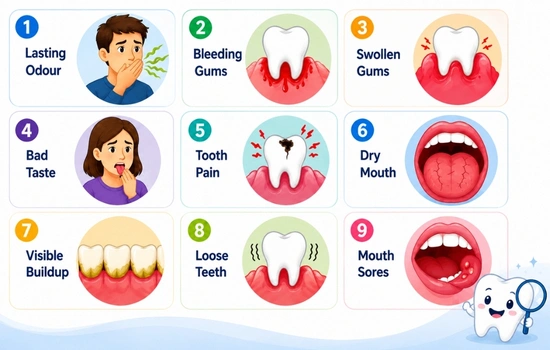
Occasional bad breath after eating certain foods is normal, but constant bad breath should not be ignored. If the smell keeps coming back even after brushing, flossing, or using mouthwash, it may be a sign of an underlying dental problem.
- Lasting Odour: Bad breath that does not improve after brushing may indicate bacteria buildup, gum problems, or tooth decay.
- Bleeding Gums: Bleeding while brushing or flossing can be a sign of gum irritation or early gum disease.
- Swollen Gums: Red, swollen, or tender gums may suggest infection or inflammation around the teeth.
- Bad Taste: A constant bad taste in the mouth can be linked to bacteria, infection, or trapped food particles.
- Tooth Pain: Pain or sensitivity may indicate cavities, tooth decay, or infection that could be causing bad breath.
- Dry Mouth: A dry mouth allows bacteria to grow more easily, which can make bad breath worse.
- Visible Buildup: Plaque or tartar on the teeth can trap bacteria and create unpleasant mouth odour.
- Loose Teeth: Loose teeth may be a sign of advanced gum disease and should be checked as soon as possible.
- Mouth Sores: Sores that do not heal may indicate irritation, infection, or another oral health concern.
A proper dental examination can help find the cause and guide the right treatment.
Home Care Tips to Reduce Bad Breath
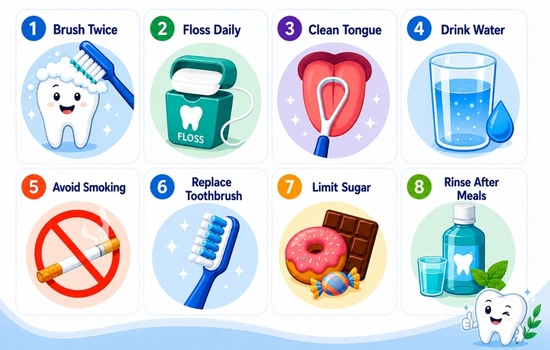
Daily oral care plays an important role in keeping your breath fresh and reducing bacteria inside the mouth. These simple habits can support better oral health and help lower the chances of bad breath returning.
- Brush Twice: Brush your teeth twice a day using fluoride toothpaste. This helps remove food particles, plaque, and bacteria from the surface of your teeth.
- Floss Daily: Flossing helps clean between the teeth where a toothbrush cannot reach. It removes trapped food particles that can cause bacteria buildup and bad breath.
- Clean Tongue: The tongue can hold bacteria, especially at the back of the mouth. Cleaning it gently with a tongue cleaner or toothbrush can help reduce mouth odour.
- Drink Water: Water helps wash away food particles and keeps the mouth moist. Staying hydrated supports saliva flow and helps prevent dry mouth.
- Avoid Smoking: Smoking can cause bad breath, dry mouth, stained teeth, and gum problems. Avoiding tobacco supports fresher breath and better oral health.
- Replace Toothbrush: An old toothbrush may not clean your teeth properly. Replace it every few months or when the bristles become worn.
- Limit Sugar: Sugary foods and drinks can feed bacteria in the mouth and increase the risk of tooth decay. Reducing sugar intake can help protect your teeth and breath.
- Rinse After Meals: Rinsing your mouth with water after eating can help remove food particles. This is especially useful when brushing is not possible.
Good home care can reduce bad breath and support healthier teeth and gums. However, if the smell continues even after regular cleaning, professional dental advice may be needed.
When Should You See a Dentist for Bad Breath?
A dentist can check for hidden causes such as plaque buildup, gum disease, tooth decay, dry mouth, or infection.
- Lasting Smell: If bad breath lasts for several days or weeks, it may be more than a temporary issue and should be checked.
- Quick Return: If mouth odour returns soon after brushing, bacteria may be hiding between teeth, on the tongue, or below the gum line.
- Bleeding Gums: Bleeding while brushing or flossing can be a sign of gum disease or gum irritation.
- Swollen Gums: Red, swollen, or tender gums may indicate inflammation or infection around the teeth.
- Tooth Pain: Pain or sensitivity can be linked to cavities, decay, or dental infection that may cause bad breath.
- Bad Taste: A constant bad taste in the mouth may come from bacteria, infection, or trapped food particles.
- Dry Mouth: Regular dry mouth can allow bacteria to grow more easily and make bad breath worse.
- Long Gap: If you have not visited a dentist in a long time, a checkup can help detect hidden oral health issues early.
Early care can help find the real cause and prevent the problem from becoming more serious.
Why Professional Help Matters
A dentist can find problems such as gum disease, tartar buildup, cavities, or infections. Once the cause is treated, bad breath often improves.
Professional guidance also helps you follow the right oral care routine for your needs.
Conclusion
Bad breath can be frustrating and embarrassing, especially when it does not improve after brushing or using mouthwash. In many cases, the real cause may be plaque buildup, gum disease, tooth decay, dry mouth, or bacteria hidden in areas that are hard to clean at home.
The right bad breath treatment starts with finding the cause. Good oral hygiene, regular flossing, tongue cleaning, drinking enough water, and professional dental care can all help improve breath freshness and protect your oral health.
If bad breath is affecting your confidence or continues for a long time, contact for professional dental care and personalised treatment. You can also make an appointment to get the right guidance for your oral health.