
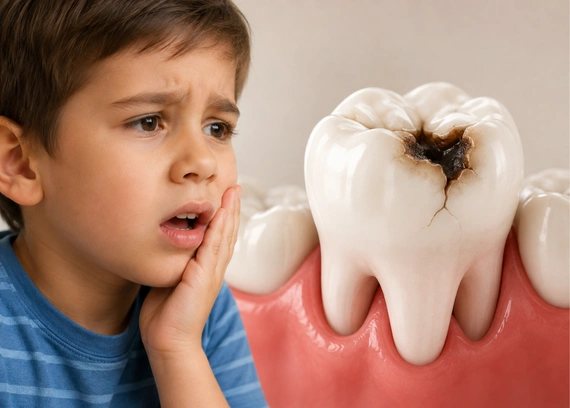
Cavities are common in children and can develop when bacteria in the mouth break down sugars from food and drinks, producing acids that weaken tooth enamel. Because children’s teeth can be more vulnerable to decay, cavities may progress if they are not noticed and treated early.
The good news is that many childhood cavities can be prevented with good brushing habits, a balanced diet, fluoride, and regular dental check-ups. In this guide, we’ll explain why kids get cavities, the signs parents should watch for, how to prevent them, and the treatment options available when decay occurs.
What Is a Cavity?
A cavity is a small hole or damaged area that forms when acids produced by mouth bacteria gradually weaken the tooth enamel. These acids are created when bacteria feed on sugars and starches left on the teeth. If the process continues, the decay can move deeper into the tooth and may eventually cause pain or infection.
Cavities can develop in both baby teeth and permanent teeth, which is why early care and prevention are important for children.
What Are the Signs of Cavities in Kids?
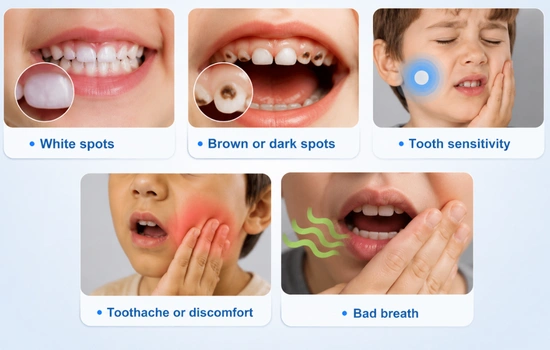
Cavities are not always easy to notice in children, especially during the early stages. Parents may notice changes in the appearance of the teeth or changes in how their child reacts to certain foods and drinks.
Common signs include:
- White spots: Early enamel changes may appear as small white marks.
- Brown or dark spots: As decay progresses, darker areas may develop on the tooth.
- Tooth sensitivity: Your child may react to hot, cold, or sweet foods and drinks.
- Toothache or discomfort: Persistent pain, particularly while eating, may indicate decay.
- Bad breath: Ongoing bad breath can sometimes be associated with bacteria and dental problems.
Why Do Kids Get Cavities?
Cavities can develop when bacteria in the mouth use sugars and starches from food and drinks to produce acids. Frequent exposure to these acids can gradually weaken the enamel and increase the risk of tooth decay. Children’s teeth may be more vulnerable, so daily habits and regular dental care are important.
Common causes include:
- Sugary foods and drinks: Frequent sweets, soft drinks, juice, and other sugary foods can increase the risk of decay.
- Poor brushing habits: Incomplete or inconsistent brushing can leave plaque and food particles on the teeth.
- Frequent snacking: Eating or drinking sugary or starchy foods often gives bacteria more opportunities to produce harmful acids.
- Developing enamel: Children’s teeth can be more susceptible to decay because their enamel is still developing.
- Low fluoride exposure: Fluoride helps strengthen enamel and protect teeth from decay.
- Poor diet choices: A diet high in sugary or highly processed foods can contribute to cavity development.
Understanding these factors can help parents build healthier daily routines and reduce their child’s risk of cavities.
How to Prevent Cavities in Kids?
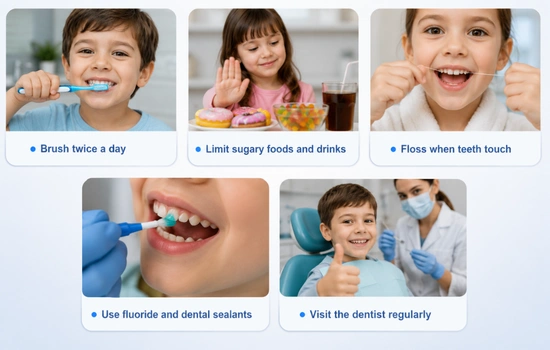
Simple daily habits can go a long way in protecting your child’s teeth. Good brushing, healthy food choices, fluoride, and regular dental visits can all help reduce the risk of cavities.
- Brush twice a day: Help your child brush properly with fluoride toothpaste.
- Limit sugary foods and drinks: Reduce frequent sweets, juice, soft drinks, and sugary snacks.
- Floss when teeth touch: Clean between teeth to remove food and plaque that brushing may miss.
- Use fluoride and dental sealants: Ask your dentist whether fluoride treatments or sealants are suitable for your child.
- Visit the dentist regularly: Routine check-ups help identify early signs of tooth decay and keep your child’s teeth healthy.
Building these habits early can help your child develop a healthy oral care routine that continues as they grow.
What Foods Should Kids Eat and Avoid for Healthy Teeth?
A balanced diet can help support strong teeth and reduce the risk of cavities. Encourage nutritious foods regularly and limit sugary or sticky foods that can increase the risk of tooth decay.
| What to Eat | What to Avoid or Limit |
| Fruits and vegetables such as apples, carrots, celery, and broccoli | Soft drinks, sugary juices, and other sweetened drinks |
| Milk, cheese, and plain yogurt | Sticky sweets, lollipops, and chewy candies |
| Leafy greens such as spinach and kale | Cakes, biscuits, and other sugary snacks |
| Eggs, fish, nuts, and seeds | Sugary cereals and flavoured milk or yogurt |
| Water between meals | Frequent sugary or starchy snacks |
How Are Cavities in Kids Treated?
The treatment for a child’s cavity depends on how much the tooth has been affected. Early treatment can help stop decay from progressing and protect the tooth. Your dentist will examine the affected tooth and recommend the most suitable option based on your child’s oral health and treatment needs.
- Dental fillings: A filling may be used when decay has created a cavity that can still be restored. The dentist removes the damaged portion of the tooth and fills the space with a suitable material, helping restore the tooth’s shape and function.
- Dental crowns: A crown may be recommended when a child’s tooth has extensive decay or damage and needs more protection than a filling can provide. It covers the affected tooth and helps protect it from further damage.
- Pulp treatment: If decay reaches the inner part of the tooth, treatment may be needed to remove the affected tissue and protect the remaining tooth. This can help preserve a baby tooth when appropriate and prevent the infection from progressing.
- Tooth extraction: If a tooth is severely damaged and cannot be restored, the dentist may recommend removing it. Extraction is generally considered when preserving the affected tooth is no longer a suitable option.
Early dental care can make treatment simpler and help prevent cavities from progressing into more serious problems.
When to Visit the Dentist
Regular dental visits are important for children because cavities may develop before they cause noticeable pain. A dentist can check your child’s teeth, identify early signs of decay, and recommend preventive or restorative care when needed.
You should arrange a dental visit if your child has:
- Tooth pain or sensitivity: Discomfort when eating or drinking, especially with hot, cold, or sweet foods.
- White, brown, or dark spots: Changes in the colour or appearance of a tooth may indicate early or developing decay.
- Difficulty eating: Your child avoids chewing or complains that eating is uncomfortable.
- Persistent bad breath: Ongoing bad breath may be linked to bacteria or an underlying dental problem.
- Swelling around a tooth or gums: Swelling can be a sign that the tooth needs prompt professional attention.
Even if your child has no obvious symptoms, regular dental check-ups can help monitor their teeth and identify problems early.
Frequently Asked Questions
1. Why do kids get cavities?
Cavities can develop when bacteria use sugars and starches from food and drinks to produce acids that weaken tooth enamel. Frequent snacking and poor brushing can increase the risk.
2. Are cavities in baby teeth common?
Yes. Baby teeth can develop cavities, so they need regular brushing, healthy food choices, and routine dental care.
3. How can I prevent cavities in my child?
Help your child brush twice a day with fluoride toothpaste, clean between teeth when needed, limit sugary foods and drinks, and maintain regular dental check-ups.
4. Can cavities in children be treated?
Yes. Depending on the severity, treatment may include a filling, crown, pulp treatment, or extraction. Your dentist will recommend the appropriate option after examining the tooth.
5. Should my child see a dentist even without tooth pain?
Yes. Cavities may not cause noticeable symptoms in the early stages. Regular dental visits can help identify problems before they become more serious.
Conclusion
Cavities are common in children, but many cases can be prevented with consistent oral care and healthy daily habits. Helping your child brush twice a day, limiting sugary foods and drinks, choosing tooth-friendly snacks, and keeping regular dental appointments can support healthier teeth as they grow.
If you notice tooth pain, sensitivity, dark spots, swelling, or other changes in your child’s teeth, don’t wait for the problem to worsen. Book a dental appointment so your child’s teeth can be checked and any necessary treatment can be provided early.