
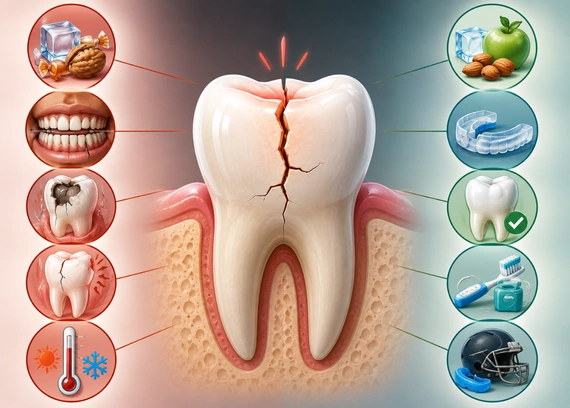
Have you ever felt a sharp pain when biting into food or chewing and wondered what caused it?
In some cases, the discomfort may be linked to a cracked tooth. A crack is not always easy to see, and many people continue using the affected tooth without realising that damage has already occurred. Even a small crack can cause sensitivity, pain, and discomfort during everyday activities.
The challenge is that a cracked tooth often becomes worse over time if it is left untreated. Everyday habits such as chewing hard foods, grinding your teeth, or accidental injuries can place extra pressure on the tooth and deepen the crack. Understanding the common causes of a cracked tooth can help you take preventive steps, protect your oral health, and reduce the risk of more serious dental problems in the future.
What Is a Cracked Tooth?
A cracked tooth is a tooth that has developed a fracture or split in its structure. The crack may be very small and difficult to see, or it may extend deeper into the tooth and affect its strength and function.
Not all tooth cracks are the same. Some only affect the outer enamel, while others extend into deeper layers of the tooth. Depending on the location and severity of the crack, symptoms can range from mild discomfort to significant pain while chewing.
Common Causes of a Cracked Tooth
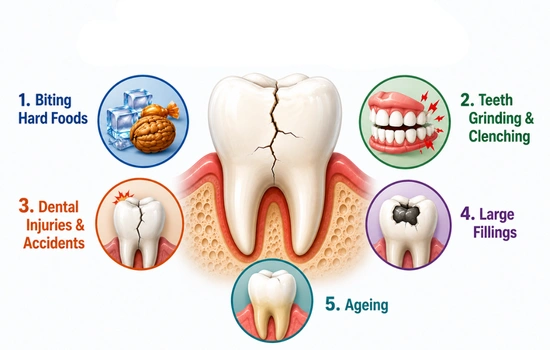
Understanding the common causes can help you protect your teeth and reduce the chances of future damage.
1. Biting Hard Foods
One of the most common causes of a cracked tooth is biting down on hard foods or objects. Although teeth are strong, excessive force can create tiny fractures in the enamel that may gradually become larger cracks over time.
Common examples include:
- Ice cubes
- Hard candies
- Popcorn kernels
- Nuts with hard shells
- Hard lollies
Many people crack a tooth while chewing hard foods because excessive pressure is placed on one area of the tooth. Teeth with existing fillings, wear, or minor damage may be more prone to cracking.
Avoiding hard foods and chewing carefully can help protect your teeth from unnecessary damage. Small changes in daily habits can go a long way towards preventing a cracked tooth.
2. Teeth Grinding and Clenching
Teeth grinding and clenching, also known as bruxism, can place significant pressure on your teeth over time. Many people grind their teeth while sleeping and may not realise it until they start experiencing symptoms. The constant force can gradually weaken the tooth structure, increasing the risk of developing a cracked tooth.
Common signs of teeth grinding include:
- Jaw soreness
- Morning headaches
- Worn or flattened teeth
- Tooth sensitivity
- Facial tension
- Clicking or discomfort in the jaw
Because teeth grinding often happens during sleep, the damage can develop gradually without obvious symptoms. Managing it early can help protect your teeth and reduce the risk of cracks.
Ongoing grinding can place excessive pressure on your teeth and lead to long term damage. Early intervention can help prevent discomfort and protect your oral health.
3. Dental Injuries and Accidents
Sports injuries, falls, and unexpected accidents can sometimes cause a tooth to crack or fracture. Even if the tooth looks normal after the injury, there may be hidden damage beneath the surface.
Common causes include:
- Sports related impacts
- Falls and slips
- Vehicle accidents
- Direct blows to the face or mouth
A crack caused by trauma may not always be visible immediately and symptoms can appear later. This is why it is important to have your teeth checked after any significant impact to the mouth.
Even minor dental injuries should not be ignored. Early examination can help identify hidden cracks and prevent further damage to the tooth.
4. Large Fillings
Teeth with large fillings may be more prone to cracking because a significant portion of the natural tooth structure has already been removed. This can make the tooth weaker and less able to withstand everyday chewing forces.
Common factors that increase the risk include:
- Large or old fillings
- Weakened tooth structure
- Repeated chewing pressure
- Existing tooth wear
Over time, the constant pressure from biting and chewing can place stress on these weakened areas, increasing the likelihood of a cracked tooth.
While fillings help restore damaged teeth, teeth with large fillings may require extra care and regular dental monitoring. Early detection of weakness can help prevent more serious fractures in the future.
5. Ageing
As we age, our teeth naturally go through years of daily use and wear. Over time, the protective enamel can become thinner, making teeth less resistant to pressure and more vulnerable to cracks and fractures.
Factors associated with ageing include:
- Natural enamel wear
- Increased tooth brittleness
- Long term chewing stress
- Greater risk of tooth fractures
People over the age of 40 are generally more likely to develop a cracked tooth because of the gradual changes that occur in the tooth structure over time.
Ageing is a natural process, but regular dental care can help identify weakened teeth early. Taking preventive steps can help reduce the risk of cracks and maintain stronger teeth for longer.
Understanding these causes can help you take practical steps to protect your teeth and reduce the risk of future damage.
Signs You May Have a Cracked Tooth
Recognising the symptoms early can help prevent the crack from becoming larger and more difficult to treat.
- Chewing Pain: Pain or discomfort while chewing may occur when pressure is placed on a cracked tooth.
- Sharp Sensation: A sudden sharp pain when releasing your bite can be a common sign of a tooth crack.
- Hot Sensitivity: Hot foods and drinks may trigger discomfort if the crack exposes the inner layers of the tooth.
- Cold Sensitivity: Sensitivity to cold beverages or foods can occur when the tooth structure becomes damaged.
- Tooth Swelling: Swelling around the affected tooth may indicate irritation or inflammation caused by the crack.
- Occasional Pain: Pain that comes and goes can make a cracked tooth difficult to identify without a dental examination.
- Unclear Discomfort: The discomfort may be difficult to pinpoint because the pain can spread to surrounding teeth or areas of the mouth.
Because symptoms can be inconsistent, many people delay treatment. A professional examination can help identify cracks that may not be visible to the naked eye.
Symptoms of a cracked tooth are often unpredictable, which makes professional diagnosis important. Early evaluation can help prevent further damage and improve treatment outcomes.
Why a Cracked Tooth Should Not Be Ignored
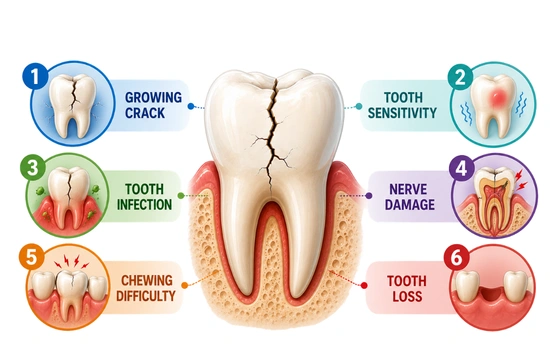
Ignoring a cracked tooth can lead to ongoing discomfort, difficulty eating, and damage that may require more complex treatment in the future.
- Growing Crack: Small cracks can gradually become larger and affect more of the tooth structure.
- Tooth Sensitivity: A cracked tooth may become increasingly sensitive to hot, cold, or sweet foods and drinks.
- Tooth Infection: Bacteria can enter through the crack and cause an infection inside the tooth.
- Nerve Damage: Deep cracks may reach the tooth pulp, affecting the nerves and causing significant pain.
- Chewing Difficulty: Eating and chewing can become uncomfortable as pressure is placed on the damaged tooth.
- Tooth Loss: In severe cases, the tooth may become too damaged to save and require extraction.
Delaying treatment can allow a minor crack to develop into a more serious dental problem. Early dental care can help protect your tooth, relieve discomfort, and improve the chances of successful treatment.
Treatment Options for a Cracked Tooth
A dentist will carefully examine the tooth to determine how far the crack extends and recommend the best treatment option to protect the tooth and prevent further damage.
Dental Filling
For small cracks or minor tooth damage, a dental filling may be used to restore the affected area and strengthen the tooth. This treatment helps seal the crack and reduce the risk of it becoming larger.
A dental filling may be suitable when:
- The crack is small
- The tooth structure remains strong
- There is minimal damage
- The crack has not reached the inner tooth layers
Early treatment with a filling can help preserve the natural tooth and prevent more extensive procedures later.
Dental Crown
When a crack affects a larger portion of the tooth, a dental crown may be recommended. A crown covers the entire tooth, providing additional strength and protection while preventing the crack from spreading.
Benefits of a dental crown include:
- Protects weakened teeth
- Restores normal chewing function
- Helps prevent further cracking
- Provides long term support
Crowns are commonly used when the tooth needs more protection than a filling can provide.
Root Canal Treatment
If the crack extends into the pulp of the tooth, where the nerves and blood vessels are located, root canal treatment may be necessary. This procedure removes infected or damaged tissue from inside the tooth and helps save the natural tooth.
Root canal treatment may be recommended when:
- The crack reaches the tooth pulp
- Persistent pain is present
- Infection develops inside the tooth
- Sensitivity becomes severe
Treating the problem early can help prevent the need for tooth extraction.
Seeking professional care early can improve treatment outcomes, relieve discomfort, and increase the chances of saving your natural tooth.
When Should You See a Dentist?
A cracked tooth should never be ignored, even if the discomfort seems minor at first. Small cracks can become larger over time, increasing the risk of pain, infection, and more complex dental treatment. Seeking professional care early can help protect the tooth and prevent further damage.
A dentist can assess the condition of the tooth, identify hidden cracks, and recommend the most suitable treatment based on the severity of the problem.
- Pain While Chewing: Discomfort when biting or chewing may indicate that the crack is affecting the tooth structure.
- Ongoing Tooth Sensitivity: Persistent sensitivity to hot, cold, or sweet foods may be a sign of a cracked tooth.
- Swelling Around a Tooth: Swelling or tenderness near the affected tooth can indicate irritation or infection.
- Visible Cracks: Any visible line or fracture on a tooth should be examined by a dentist.
- Dental Trauma: A fall, sports injury, or impact to the mouth can cause cracks that are not always immediately visible.
- Unexplained Tooth Discomfort: Pain that comes and goes without an obvious cause may be linked to a hidden tooth crack.
An Oral Health Checkup can help identify hidden cracks, assess the extent of the damage, and detect problems before they become more serious.
Conclusion
A cracked tooth can develop from a variety of causes, including hard foods, teeth grinding, accidents, ageing, and weakened tooth structure. While some cracks may appear minor at first, they can become more serious if left untreated. Understanding the common causes and following preventive habits can help reduce the risk of damage and protect your long term oral health.
If you are experiencing symptoms of a cracked tooth, do not wait for the problem to worsen. Contact Sandringham Dental for professional advice and personalised treatment recommendations. Early diagnosis can help protect your natural tooth and prevent more complex dental procedures in the future. You can also make an appointment to have your teeth assessed and receive the care you need for a healthier smile.