
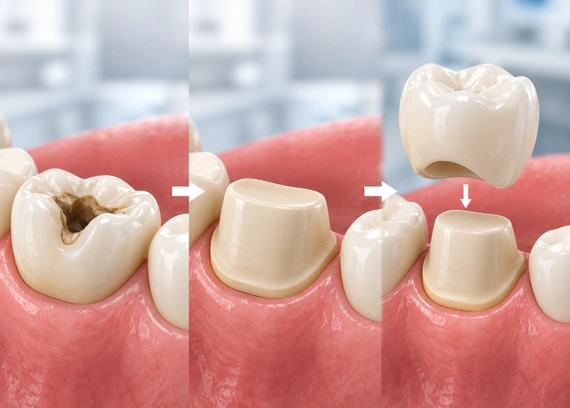
A damaged or weakened tooth doesn’t always mean it has to be removed. In many cases, a dental crown is an effective solution that restores the tooth’s strength, function, and natural appearance while protecting it from further damage. Whether your tooth has a large cavity, a crack, severe wear, or has undergone root canal treatment, a dental crown can help preserve your natural tooth and improve your overall oral health.
If you’re considering dental crown treatment, understanding the process can help you feel more confident about your decision. This guide explains everything you need to know before treatment, including when a dental crown is recommended, the different types available, what to expect during the procedure, the benefits, aftercare tips, and how long a crown can last. By the end of this guide, you’ll have the information you need to make an informed decision about restoring your smile.
What Is a Dental Crown?
A dental crown is a custom-made cap that completely covers the visible part of a damaged or weakened tooth. It is designed to restore the tooth’s shape, size, strength, and appearance while protecting it from further damage. Once permanently bonded in place, a dental crown functions like a natural tooth, allowing you to chew, speak, and smile comfortably.
Dental crowns are commonly recommended when a tooth is too damaged for a filling but can still be preserved. They are made from durable materials such as porcelain, ceramic, zirconia, metal, or porcelain-fused-to-metal (PFM). Your dentist will recommend the most suitable material based on the tooth’s location, your bite, aesthetic preferences, and overall oral health.
Unlike removable dental appliances, a crown is a fixed restoration that becomes a long-term part of your smile. With proper care and regular dental check-ups, a well-made dental crown can last for many years while helping maintain both the function and appearance of your natural teeth.
When Do You Need a Dental Crown?
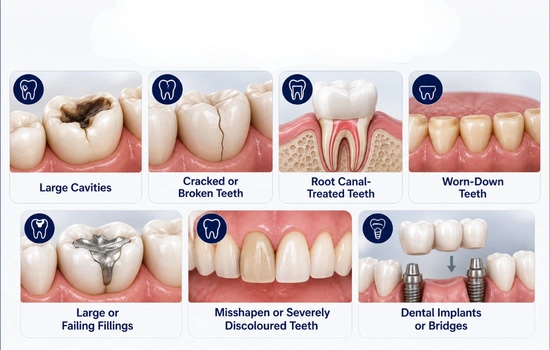
Your dentist may recommend a dental crown when a tooth is too damaged or weakened to be restored with a filling alone. A crown provides full coverage, protecting the tooth while restoring its strength, function, and natural appearance.
A dental crown may be recommended if you have:
- Large Cavities: When tooth decay is too extensive for a filling to provide lasting support.
- Cracked or Broken Teeth: To protect damaged teeth from further fractures and restore their strength.
- Root Canal-Treated Teeth: To reinforce and protect teeth that become more fragile after root canal treatment.
- Worn-Down Teeth: To rebuild teeth affected by grinding, acid erosion, or years of wear.
- Large or Failing Fillings: When an existing filling no longer provides enough support for the remaining tooth structure.
- Misshapen or Severely Discoloured Teeth: To improve the appearance and restore a more natural-looking smile.
- Dental Implants or Bridges: To replace missing teeth or support a dental bridge for improved function and aesthetics.
Types of Dental Crowns
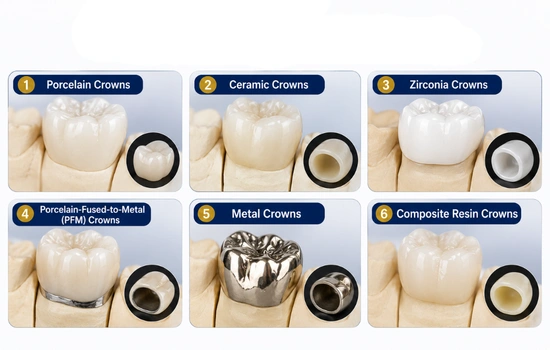
Dental crowns are made from different materials, each offering its own advantages in terms of appearance, strength, durability, and cost. The right choice depends on factors such as the location of the tooth, your oral health, and your cosmetic preferences. Your dentist will recommend the most suitable crown based on your individual needs.
Porcelain Crowns
Porcelain crowns are designed to closely mimic the colour, texture, and translucency of natural teeth. They are one of the most popular choices for restoring front teeth because they blend seamlessly with your smile.
- Best for: Front teeth and visible areas of the smile.
- Appearance: Excellent colour matching for a natural-looking finish.
- Benefits: Enhances the appearance of damaged or discoloured teeth.
- Consideration: Less resistant to heavy biting forces than zirconia or metal crowns.
Ceramic Crowns
Ceramic crowns are completely metal-free and provide a beautiful, natural appearance. They are an excellent option for patients who want aesthetic results while avoiding metal-based restorations.
- Best for: Front teeth and premolars.
- Appearance: Natural-looking with lifelike translucency.
- Benefits: Biocompatible and suitable for patients with metal allergies.
- Consideration: Strong enough for most everyday use but may not be ideal for heavy grinders.
Zirconia Crowns
Zirconia crowns are known for their exceptional strength and durability while still offering a natural appearance. They are one of the most commonly recommended crown materials for both front and back teeth.
- Best for: Front and back teeth.
- Strength: Highly resistant to cracks, chips, and wear.
- Benefits: Combines long-lasting durability with attractive aesthetics.
- Consideration: Ideal for patients who need a strong and reliable restoration.
Porcelain-Fused-to-Metal (PFM) Crowns
PFM crowns feature a durable metal base covered with a porcelain outer layer. This combination provides both strength and a tooth-like appearance, making them a reliable choice for many restorative treatments.
- Best for: Front and back teeth.
- Strength: Strong metal framework for added durability.
- Benefits: Offers a balance between aesthetics and strength.
- Consideration: Over time, the metal edge may become visible near the gum line.
Metal Crowns
Metal crowns are made from durable alloys such as gold or other metals. They are highly resistant to wear and are commonly used for molars where strength is more important than appearance.
- Best for: Back teeth and molars.
- Strength: Extremely durable and long-lasting.
- Benefits: Withstands heavy chewing and rarely chips or breaks.
- Consideration: Metallic appearance makes them less suitable for visible teeth.
Composite Resin Crowns
Composite resin crowns are an affordable restoration option that is often used as a temporary solution. While they provide acceptable aesthetics, they generally have a shorter lifespan than other crown materials.
- Best for: Temporary or short-term restorations.
- Cost: More budget-friendly than other crown types.
- Benefits: Quick to fabricate and easy to repair if needed.
- Consideration: Less durable and more prone to wear over time.
Dental Crown Procedure: What to Expect
A dental crown procedure is a straightforward treatment that restores the strength, function, and appearance of a damaged tooth. In most cases, the treatment is completed over two appointments, allowing your dentist to prepare the tooth, create a custom-made crown, and securely place it for a comfortable, long-lasting fit. Some clinics may also offer same-day crowns using advanced digital technology.
Here’s what you can expect throughout the treatment process.
First Visit: Tooth Preparation
During your first appointment, your dentist focuses on preparing the tooth and collecting the information needed to create your custom dental crown.
- Examination & Treatment Planning: Your dentist will carefully examine the affected tooth and may take digital X-rays to assess the tooth, roots, and surrounding bone. This helps determine whether a dental crown is the most appropriate treatment for your dental needs.
- Local Anaesthesia:Before beginning the procedure, the area around the tooth is numbed with a local anaesthetic to ensure a comfortable and pain-free experience throughout the treatment.
- Tooth Preparation:Any decay, damage, or old dental restorations are removed before the tooth is gently reshaped. This creates enough space for the new crown while ensuring a secure and natural fit.
- Digital Impressions: Once the tooth has been prepared, your dentist will take digital scans or traditional impressions. These detailed records help create a custom crown that matches your bite and fits precisely.
- Shade Selection: If you’re receiving a tooth-coloured crown, such as porcelain, ceramic, or zirconia, your dentist will carefully select a shade that blends naturally with your surrounding teeth.
- Temporary Crown Placement: A temporary crown is placed over the prepared tooth to protect it while your permanent crown is being fabricated. It helps reduce sensitivity, maintains normal function, and allows you to eat and speak comfortably until your next appointment.
Laboratory Phase
After your first visit, the digital scans or dental impressions are sent to a professional dental laboratory, where your permanent crown is custom-made.
Skilled dental technicians use advanced technology and high-quality materials such as porcelain, ceramic, zirconia, or metal to create a crown that matches your tooth’s size, shape, colour, and bite. Before it is sent back to your dentist, the crown undergoes careful quality checks to ensure it provides an accurate fit, long-lasting durability, and a natural appearance.
This stage typically takes 1 to 2 weeks, depending on the type of crown being fabricated and the laboratory’s turnaround time.
Second Visit: Crown Placement
Once your custom dental crown is ready, you’ll return to the clinic for the final stage of your treatment.
- Temporary Crown Removal: Your dentist will gently remove the temporary crown and clean the prepared tooth, ensuring the surface is ready for the permanent restoration.
- Permanent Crown Fitting:The new crown is carefully placed over the tooth to check its fit, bite, colour, and overall appearance. Minor adjustments may be made to ensure it feels comfortable and blends naturally with your smile.
- Permanent Cementation: Once the fit has been confirmed, the crown is permanently bonded to your tooth using a strong dental cement. This secures the restoration and restores the tooth’s strength and function.
- Final Bite Check: Before completing the procedure, your dentist will check your bite and make any necessary adjustments to ensure the crown feels comfortable when you chew or speak. The crown is then polished, and you’ll receive aftercare instructions to help maintain your new restoration.
How Long Does the Procedure Take?
| Stage | What Happens | Estimated Time |
| First Visit | Examination, tooth preparation, impressions, and temporary crown | 60–90 minutes |
| Laboratory Phase | Your custom crown is fabricated | 1–2 weeks |
| Second Visit | Permanent crown fitting, bonding, and final adjustments | 20-40 minutes |
Benefits of Dental Crowns
Dental crowns offer both functional and cosmetic benefits. They not only protect damaged teeth but also restore your ability to chew comfortably, improve your smile, and help preserve your natural tooth for the long term.
Here are some of the key benefits of dental crowns:
1. Restores Tooth Strength
A weakened or damaged tooth can become vulnerable to fractures. A dental crown completely covers the tooth, providing extra support and allowing you to bite and chew comfortably again.
2. Protects Damaged Teeth
Crowns act as a protective shield, preventing cracked, worn, or weakened teeth from sustaining further damage and helping preserve your natural tooth for longer.
3. Improves Your Smile
Tooth-coloured crowns are designed to match the shade, shape, and size of your natural teeth, improving the appearance of discoloured, chipped, or misshapen teeth while creating a more balanced smile.
4. Restores Normal Chewing and Speaking
Damaged teeth can make eating or speaking uncomfortable. A properly fitted crown restores normal function, allowing you to enjoy your favourite foods and speak clearly with confidence.
5. Provides Long-Lasting Results
Dental crowns are made from durable materials such as porcelain, ceramic, zirconia, and metal. With proper care and regular dental check-ups, they can last 10–15 years or even longer.
6. Supports Other Dental Treatments
Crowns are commonly used to complete other restorative procedures, including:
- Protecting a tooth after root canal treatment
- Restoring dental implants
- Supporting dental bridges
- Replacing large or failing fillings
7. Preserves Your Natural Tooth
Rather than removing the tooth, a dental crown strengthens and protects the remaining healthy tooth structure. This helps maintain your natural bite and can reduce the need for more complex treatments in the future.
How Long Do Dental Crowns Last?
A dental crown is designed to be a durable and long-lasting restoration. While every patient’s experience is different, most dental crowns last 10 to 15 years, and many can remain in excellent condition for 20 years or more with proper care.
The lifespan of a crown depends on several factors, including the material used, your oral hygiene routine, eating habits, and regular dental check-ups.
Factors That Affect the Lifespan of a Dental Crown
- Crown Material: Zirconia and metal crowns are generally more durable than porcelain or composite resin crowns.
- Oral Hygiene: Brushing twice daily, flossing, and routine dental cleanings help protect both the crown and the supporting tooth.
- Eating Habits: Frequently chewing hard foods, ice, or using your teeth to open packaging can damage the crown.
- Teeth Grinding (Bruxism): Grinding or clenching your teeth can shorten the lifespan of your crown. Your dentist may recommend a custom night guard.
- Regular Dental Visits: Routine examinations allow your dentist to identify and address any problems before they become serious.
Aftercare and Maintenance of Dental Crowns
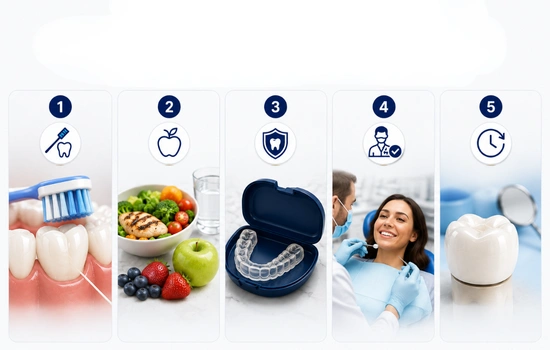
Once your dental crown is in place, proper care is essential to keep both the crown and the underlying tooth healthy. With good oral hygiene and regular dental visits, your crown can remain strong and functional for many years.
Brushing & Flossing
Brush your teeth twice a day with fluoride toothpaste and floss daily around the crown to remove plaque and protect the surrounding gums.
Healthy Eating Habits
You can enjoy most foods after your permanent crown is placed, but avoid biting on hard objects such as ice, hard sweets, or popcorn kernels. Limiting sticky foods can also help prevent the crown from loosening.
Protect Your Crown
If you grind or clench your teeth, your dentist may recommend wearing a custom night guard to reduce pressure on the crown and improve its longevity.
Regular Dental Check-ups
Visit your dentist every six months for routine examinations and professional cleanings. Regular check-ups help ensure your crown, supporting tooth, and gums remain healthy.
Crown Longevity
With proper care, most dental crowns last 10–15 years, while many can remain in excellent condition for 15–20 years or longer.
Conclusion
A dental crown is a reliable and long-lasting solution for restoring the strength, function, and appearance of a damaged or weakened tooth. Whether you need treatment after a large filling, a cracked tooth, or root canal therapy, a custom-made crown can protect your natural tooth while helping you eat, speak, and smile with confidence. With the right crown material, proper aftercare, and regular dental check-ups, your restoration can provide lasting results for many years.
If you’re experiencing tooth damage or have been advised that you may need a dental crown, don’t wait for the problem to worsen. Our experienced dental team is here to assess your oral health, explain your treatment options, and recommend the most suitable solution for your needs. Book an appointment today to take the first step towards restoring your healthy, confident smile.