
Losing a tooth can affect more than just the appearance of your smile. Many people find it harder to chew certain foods, speak clearly, or feel confident in social and professional situations. While missing teeth may seem like a cosmetic concern at first, leaving gaps untreated can also affect the surrounding teeth and overall oral health. This is why choosing the right replacement option is an important decision.
When comparing Dental Implant vs Dental Bridge, many people are unsure which treatment is best for their needs. Both options are designed to replace missing teeth and restore function, but they work in different ways and offer different long term benefits. Understanding the differences can help you make a more informed choice. Before deciding on a treatment, an Oral Health Checkup can help assess your oral health and determine which option may be most suitable for your smile.
What Is a Dental Implant?
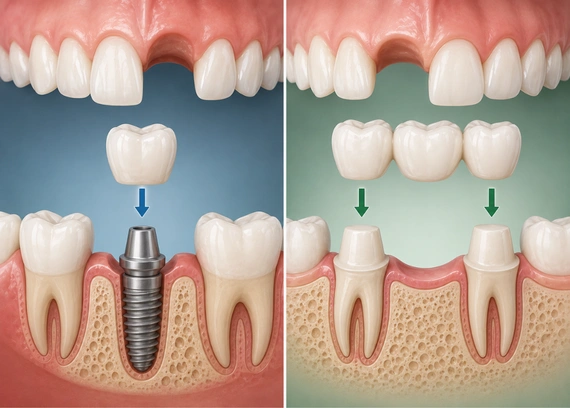
Dental implants are designed to replace a missing tooth from the root up and are considered one of the most durable tooth replacement options available. They provide a strong and stable foundation that closely mimics the function of a natural tooth.
The treatment involves placing a small titanium implant post into the jawbone. Over time, the bone naturally bonds with the implant, creating a secure foundation. Once healing is complete, a custom made dental crown is attached to the implant, restoring the appearance and function of the missing tooth.
Benefits of Dental Implants
Dental implants offer several advantages for people looking to replace a missing tooth. They are designed to provide a strong, natural looking, and long lasting solution.
- Natural Appearance: Dental implants are designed to look and feel similar to natural teeth, helping restore the appearance of your smile.
- Strong Stability: Because the implant is placed into the jawbone, it provides a secure foundation for the replacement tooth.
- Bone Preservation: The implant helps stimulate the jawbone, which can reduce the risk of bone loss after tooth loss.
- Long Term Solution: With proper care and maintenance, dental implants can provide a durable and long lasting tooth replacement option.
- Does Not Affect Nearby Teeth: Unlike some other treatments, dental implants do not rely on neighbouring teeth for support, helping preserve healthy tooth structure.
What Is a Dental Bridge?
A dental bridge is used to replace one or more missing teeth by filling the gap left behind. It is a fixed dental restoration that relies on the neighbouring teeth for support and helps restore the appearance and function of your smile.
The treatment involves placing an artificial tooth, known as a pontic, between the teeth on either side of the gap. These supporting teeth help hold the bridge securely in place. Once fitted, a dental bridge can improve chewing, support clearer speech, and restore confidence when smiling and speaking.
Benefits of a Dental Bridge
A dental bridge offers a practical way to replace missing teeth and restore everyday function. It can help improve both the appearance of your smile and your ability to eat and speak comfortably.
- Faster Treatment: Dental bridges can often be completed in fewer appointments compared to some other tooth replacement options.
- Lower Initial Cost: For many patients, a dental bridge may have a lower upfront cost than certain alternative treatments.
- Restores Smile Appearance: A bridge fills the gap left by missing teeth, helping create a more complete and natural looking smile.
- Improves Function: Replacing missing teeth can make it easier to chew food properly and speak more clearly.
Dental Implant vs Dental Bridge: Key Differences
The right choice depends on factors such as your oral health, budget, jawbone condition, and personal preferences. Understanding the key differences can help you make a more informed decision.
| Feature | Dental Implant | Dental Bridge |
| Placement Method | Titanium implant is placed into the jawbone and topped with a crown. | Artificial tooth is supported by neighbouring teeth. |
| Support | Independent replacement that does not rely on nearby teeth. | Relies on adjacent teeth for support. |
| Treatment Time | Usually requires a longer healing period before the final crown is placed. | Typically completed in a shorter timeframe. |
| Durability | Designed to be a long term solution with proper care. | Can last many years but may require replacement over time. |
| Bone Preservation | Helps stimulate the jawbone and reduce bone loss. | Does not provide stimulation to the jawbone. |
| Effect on Nearby Teeth | Does not affect surrounding healthy teeth. | May require preparation of neighbouring teeth. |
| Appearance | Closely mimics the look and function of a natural tooth. | Provides a natural looking replacement for missing teeth. |
| Maintenance | Brushed and flossed similarly to natural teeth. | Requires special attention when cleaning around the bridge. |
| Initial Cost | Usually higher upfront cost. | Generally lower initial cost. |
| Suitability | Suitable for many patients with sufficient jawbone support. | Suitable when neighbouring teeth can support the bridge. |
A professional dental assessment can help determine which option is most suitable for your oral health needs and long term goals.
Pros and Cons of Dental Implants
Understanding the benefits and limitations of dental implants can help you make a more informed decision about your tooth replacement options.
Pros of Dental Implants
- Natural Appearance: Dental implants are designed to look and feel similar to natural teeth, helping restore the appearance of your smile.
- Long Lifespan: With proper care and regular dental visits, implants can provide a durable and long lasting tooth replacement solution.
- Bone Preservation: Because the implant is placed into the jawbone, it helps stimulate the bone and reduce the risk of bone loss after tooth loss.
- Strong Chewing Ability: Implants provide excellent stability, allowing you to chew and bite with confidence.
- Protects Adjacent Teeth: Unlike a bridge, an implant does not rely on neighbouring teeth for support, helping preserve healthy tooth structure.
Cons of Dental Implants
- Higher Upfront Cost: Dental implants generally have a higher initial cost compared to other tooth replacement options.
- Longer Treatment Time: The treatment process usually includes a healing period before the final crown can be attached.
- Minor Surgical Procedure Required: Implant placement involves a surgical procedure to position the implant into the jawbone.
Their durability, stability, and ability to support jawbone health make them a popular choice for replacing missing teeth.
Pros and Cons of Dental Bridges
Like any dental treatment, bridges offer several advantages, but there are also some factors to consider before deciding if they are the right choice for you.
Pros of Dental Bridges
- Faster Procedure: Dental bridges can often be completed in fewer appointments compared to dental implants, allowing for quicker tooth replacement.
- Lower Initial Cost: The upfront cost of a bridge is generally lower than that of a dental implant, making it a more affordable option for some patients.
- No Surgery Required: Unlike implants, bridges do not require a surgical procedure, which may be preferred by some individuals.
- Restores Appearance Quickly: A dental bridge fills the gap left by missing teeth and helps restore the appearance of your smile soon after treatment.
Cons of Dental Bridges
- May Affect Healthy Teeth: Supporting teeth usually need to be prepared to hold the bridge in place, which involves altering healthy tooth structure.
- Does Not Prevent Bone Loss: Since a bridge does not replace the tooth root, it does not provide stimulation to the jawbone and cannot prevent bone loss in the missing tooth area.
- May Need Replacement Over Time: While bridges are durable, they may eventually require repair or replacement depending on wear and oral health conditions.
The best option will depend on your individual circumstances, oral health, and long term treatment goals.
Which Option Lasts Longer?
Understanding how long each treatment typically lasts can help you make a more informed decision about your long term dental care.
Implant Lifespan
Dental implants are designed to be a long term tooth replacement solution. With proper care and regular dental visits, the implant post can often last for many years and, in some cases, even a lifetime.
Key benefits include:
- Strong integration with the jawbone
- High durability under normal chewing forces
- Long term stability
- Reduced risk of bone loss
Bridge Lifespan
Dental bridges are also durable and can provide many years of reliable function. However, they may eventually require repair or replacement depending on wear, oral hygiene, and the condition of the supporting teeth.
Factors that can affect bridge longevity include:
- Daily oral hygiene habits
- Health of supporting teeth
- Bite pressure and chewing habits
- Regular dental maintenance
Good oral hygiene and regular dental visits can help extend the lifespan of both treatments and protect your investment in your smile.
How to Choose Between a Dental Implant and a Dental Bridge
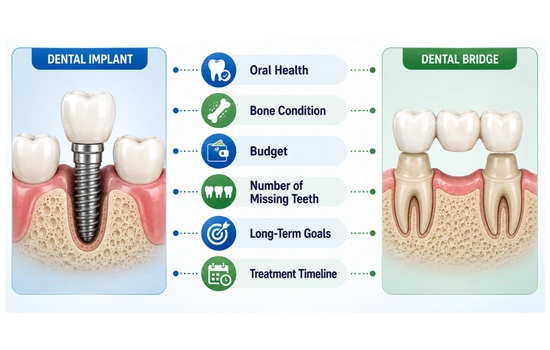
Both dental implants and dental bridges can successfully replace missing teeth, but the most suitable option will depend on your individual needs and oral health condition.
- Oral Health: The overall health of your teeth and gums plays an important role in determining which treatment is most appropriate. Healthy gums and good oral hygiene support better long term results.
- Bone Condition: Dental implants require sufficient jawbone support for successful placement. If bone loss has occurred, additional treatment may sometimes be needed before an implant can be considered.
- Budget: Treatment costs can vary between implants and bridges. While implants often have a higher upfront cost, some patients may prefer them for their long term durability.
- Number of Missing Teeth: The number and location of missing teeth can influence which option is more suitable. In some cases, a bridge may effectively replace multiple missing teeth, while implants may be recommended in others.
- Long Term Goals: Some patients prioritise longevity and bone preservation, while others may focus on treatment time or immediate restoration of function.
- Treatment Timeline: Dental bridges can often be completed more quickly, whereas dental implants typically require a healing period before the final restoration is placed.
A professional Oral Health Checkup can help assess these factors and determine which treatment option best suits your oral health needs.
When Should You Speak to a Dentist?
If you have a missing tooth or are considering replacement options, professional advice can help you choose the most suitable treatment. Early assessment can also help prevent future dental complications.
- Missing Tooth: A gap in your smile can affect both appearance and oral health.
- Difficulty Chewing: Missing teeth may make it harder to eat certain foods comfortably.
- Changes in Bite: Teeth can gradually shift after tooth loss and affect your bite.
- Existing Bridge Problems: A loose, damaged, or uncomfortable bridge should be checked by a dentist.
- Tooth Recently Extracted: Early planning can help preserve your treatment options.
- Concerns About Appearance: Replacing missing teeth can help restore confidence in your smile.
A professional assessment can guide you towards the best solution for your smile.
Conclusion
There is no one size fits all solution when it comes to replacing missing teeth. The best choice depends on factors such as your oral health, jawbone condition, lifestyle, budget, and long term goals. A professional dental assessment can help you understand your options and choose the treatment that best suits your needs and helps restore your smile with confidence.
If you are considering a dental implant or dental bridge, speaking with a dentist can help you make an informed decision based on your individual needs. Contact Sandringham Dental today to discuss your tooth replacement options and make an appointment for a personalised assessment and treatment plan.