
It usually starts with small adjustments you don’t even think about. You chew on one side, avoid certain foods, or hesitate before smiling in photos. Over time, these small changes begin to affect how you speak, eat, and carry yourself. Missing teeth aren’t just about appearance, they slowly impact your confidence and everyday comfort.
If you’ve been looking for a reliable solution, you’ve likely come across dental implants and different implant treatment options. But most explanations feel confusing or overly technical. That’s exactly why this guide keeps things simple. Here’s dental implants explained in a way that actually makes sense, so you can understand what to expect and decide if it’s the right choice for you.
What Are Dental Implants?
Most people don’t want a temporary fix. They want something that feels real and doesn’t need constant adjustment. That’s exactly why dental implants have become so popular.
Dental implants are artificial tooth roots placed into your jawbone to support a replacement tooth. Instead of sitting on the gums, they stay fixed inside the bone, which makes them feel much more natural. They’re designed to match your existing teeth in shape and color. Once done properly, it becomes hard to tell the difference between an implant and a real tooth.
How Do Dental Implants Work?
At first, the process can sound a bit overwhelming. There are multiple steps, and most people assume it’s complicated. But when you break it down, it’s actually quite simple to understand.
The idea is not just to replace the visible tooth, but to rebuild the entire structure from the root. That’s what makes dental implants feel more natural compared to other options.
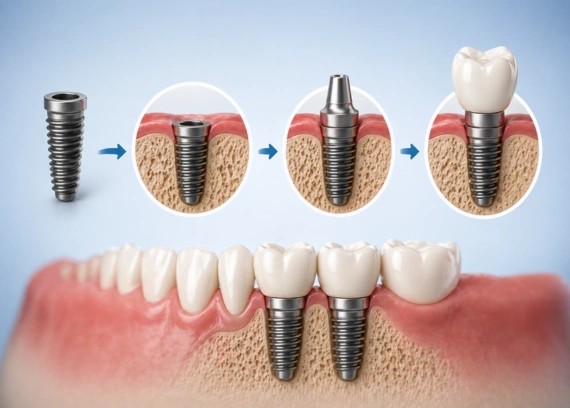
Step 1: Placing the Implant
The process begins with placing a small titanium screw into your jawbone. This acts as the root of your new tooth and forms the base for everything that follows.
This step is done carefully so the implant sits securely in the right position. Once placed, it stays under the gum while your body begins the healing process.
Step 2: Healing and Bonding
After placement, your jawbone starts to bond with the implant. This process is called integration, and it’s what gives implants their strength.
It takes a few months, but this waiting period is important. It allows the implant to become part of your jaw, making it stable enough to handle daily use later.
Step 3: Placing the Crown
Once healing is complete, a crown is attached on top of the implant. This is the visible part that looks like a natural tooth.
The crown is custom-made to match your existing teeth, so it blends in and functions like a real one when you eat or speak.
Why the Process Takes Time
Some people expect a quick fix, but implants are built differently. The time involved is what makes them strong and long-lasting. Rushing the process can affect the final result, which is why each stage is done step by step with proper healing in between.
Dental implants work by becoming part of your jaw rather than just sitting on top of it. That’s the reason they feel secure, stable, and much closer to natural teeth in everyday use.
Types of Dental Implants
Not everyone needs the same treatment. Some people are missing just one tooth, while others may need a full replacement. That’s why dental implants are planned based on your specific situation.
Understanding the different types makes it easier to see what might suit you. It also helps you ask the right questions when you go for a consultation.
Single Tooth Implant
If you’re missing just one tooth, this is usually the cleanest solution. A single implant is placed in that exact spot, and a crown is fixed on top of it.
What most people like about this option is that it doesn’t involve the nearby teeth at all. They stay exactly as they are. It also feels very natural because the pressure while chewing is handled just like a real tooth.
Multiple Implants
Now, if there are a few missing teeth in a row, placing an implant for every single one isn’t always necessary. This is where a smarter approach is used.
A few implants are placed strategically, and they support a bridge that covers multiple teeth. This reduces the number of implants while still giving strong support. It’s often a good balance between cost and stability.
Full Mouth Implants
This is for people who have lost most or all of their teeth. At this stage, the focus shifts from replacing individual teeth to rebuilding the entire smile.
Instead of placing many implants, a limited number are used to support a full set of fixed teeth. The result feels much more stable compared to removable options, and many people say it changes how they eat and speak completely.
There isn’t a one-size-fits-all option here. The right choice depends on your condition and what you expect from the treatment. Once your mouth is properly assessed, the decision becomes much clearer and more practical.
Benefits of Dental Implants
People don’t choose implants just because they’re available. They usually reach this option after trying something else or realizing they want a more permanent fix.
What really stands out is how implants improve everyday life. It’s not just about looks, it’s about comfort, confidence, and ease in simple daily activities.
- Feel very close to natural teeth: Once the implant is fully healed, it starts to feel like part of your mouth. You don’t have to think twice while eating or speaking. Most people say they forget it’s even there after some time.
- Stay fixed without slipping: Since implants are placed inside the jawbone, they don’t move around. There’s no shifting while talking or eating, which makes a big difference in confidence.
- Long-lasting with proper care: Implants are built to last for years. With good oral hygiene and regular check-ups, they can remain strong and functional for a long time without needing replacement.
- Improve chewing and speaking: Because they are stable, you can chew food more comfortably and speak more clearly. There’s no need to adjust or be careful the way you might with removable options.
- Help maintain jawbone structure: This is something many people don’t think about. When a tooth is missing, the jawbone in that area can weaken over time. Implants stimulate the bone, helping it stay strong and maintain your facial structure.
Dental implants don’t just replace missing teeth, they improve how your mouth works every day. If comfort and long-term stability matter to you, this option can make a noticeable difference.
Are Dental Implants Safe?
This is usually the first thing people ask, and it’s completely fair. Anything that involves a procedure can feel uncertain at the beginning, especially when it affects something as important as your teeth.
The good part is, dental implants aren’t new or experimental. They’ve been used for many years and are considered a reliable option when done properly by the right professional.
How Safe Are They?
Dental implants have a strong track record with a high success rate. In most cases, they work very well when the procedure is planned correctly and proper care is taken afterward.
- High success rate: Dental implants have been used for many years and show a strong success rate in most cases. When done correctly, they work reliably for a long time.
- Proper planning before the procedure: Your dentist carefully checks your teeth, gums, and jawbone before starting. This helps decide if implants are suitable for you.
- Use of scans and detailed evaluation: X-rays or 3D scans are taken to understand bone structure and choose the right placement. This reduces chances of error.
- Precise placement: The implant is positioned in a controlled and planned way, not randomly. This accuracy improves stability and long-term success.
- Focus on aftercare: Good oral hygiene and following instructions after the procedure play a big role. Proper care helps healing and reduces risk of complications.
Before starting, your dentist doesn’t just go ahead blindly. They check your overall oral condition, take scans, and plan the exact placement. This preparation is what reduces risk and improves the final outcome.
What Helps Make Them Safe?
One thing many people don’t realize is how controlled the process actually is. Everything from placement angle to bone condition is carefully considered.
- Pre Treatment Planning: The process isn’t rushed. Your dentist plans everything in advance, including where and how the implant will be placed for the best support.
- Precise Implant Placement: The angle, depth, and position of the implant are handled with precision. This level of control helps avoid complications and improves long-term stability.
- Bone Health Assessment: Your jawbone strength is checked before the procedure. A strong foundation is important to hold the implant securely over time.
- Biocompatible Implant Materials: The materials used are designed to work well with your body. They don’t easily cause reactions and are widely used in medical treatments.
- Natural Bone Integration: Over time, the implant fuses with your jawbone. This bonding process is what makes it feel stable and secure, almost like a natural tooth root.
Also, the materials used are designed to work with your body, not against it. Over time, the implant bonds with your jawbone, which adds to its stability and safety.
When Can Issues Happen?
Most people do just fine, but problems can show up when basic care is ignored. It’s usually not the procedure itself, it’s what happens before and after that makes the difference.
- Poor oral hygiene: If cleaning isn’t done properly, bacteria can build up around the implant. This can affect healing and lead to infection over time.
- Smoking habits: Smoking slows down healing and reduces blood flow. This makes it harder for the implant to settle properly in the bone.
- Untreated gum disease: Existing gum issues can weaken the area around the implant. If not treated first, it can affect the stability later.
- Skipping aftercare: Some people think the job is done once the implant is placed. That’s not true. Following aftercare instructions is just as important for long-term success.
Issues are rare, but they usually happen when basic care is overlooked. A little attention to hygiene and aftercare goes a long way in keeping everything stable.
What Materials Are Used?
A lot of people hear “implant” and immediately wonder what actually goes inside the body. It’s a fair concern. You want to be sure it’s safe, durable, and not something your body will react to.
The material used is one of the main reasons dental implants work so well over time. It’s not random or experimental, it’s something that has been tested and used for years.
Titanium as the core material
Most dental implants are made from titanium. This metal is widely used in medical treatments because it’s strong, lightweight, and highly compatible with the human body. It doesn’t easily cause reactions, which makes it a reliable choice.
Natural bonding with bone
Here’s what makes titanium special. After the implant is placed, your jawbone slowly grows around it and bonds with it. This process is what gives implants their strength. It’s not just placed in the bone, it becomes part of it.
Top portion (crown material)
The visible part of the implant, the crown, is usually made from ceramic or porcelain. This is chosen because it closely matches the color and texture of natural teeth. It’s designed to look real and handle daily use like chewing.
Safe and long-lasting combination
The combination of a titanium base and a ceramic crown gives both strength and appearance. One handles support, the other handles how it looks and feels in your mouth.
Dental implants use materials that are proven to be safe, strong, and compatible with the body. That’s why, once healed, they feel stable and natural without causing long-term issues.nd quick. Just be prepared for a short adjustment period and regular care to keep them comfortable and effective.
Who May Not Be Suitable?
Not everyone is ready for dental implants right away, and that’s completely normal. Your mouth needs to be in the right condition before moving forward with this type of treatment.
The main focus is on whether your gums and jawbone can properly support the implant. If the foundation isn’t strong, the results may not last as expected.
- Weak jawbone: If the bone has reduced over time, it may not be strong enough to hold the implant securely.
- Unhealthy gums: Gum infections or inflammation can affect healing and increase the risk of complications.
- Ongoing oral issues: Problems like untreated cavities or gum disease need to be addressed first before considering implants.
What Happens in These Cases
If your mouth isn’t ready yet, it doesn’t mean implants are not possible. Your dentist may suggest improving the condition first.
This could include treatments to strengthen the bone or improve gum health before placing the implant.
Not being ready for implants immediately is quite common. With the right preparation and guidance, many people can still move forward with this option later on.
Recovery and Healing Time
A lot of people expect a quick result, but this is where dental implants work differently. It’s not a same-day fix, and that’s actually what makes the result more reliable.
Instead of rushing, your body is given time to adapt and build a strong base for the implant. That’s what makes it feel stable later on.
What Happens After the Procedure
Once the implant is placed, your body begins a natural healing process. You may feel slight discomfort in the beginning, but it usually settles within a few days.
The real work happens beneath the surface. Your jawbone slowly connects with the implant, creating a firm hold that supports the final tooth.
What You Need to Do During Healing
This stage is not complicated, but it does need attention. Following basic care makes a big difference in how well the implant settles.
- Avoid putting pressure on the area
- Stick to softer foods for some time
- Maintain proper oral hygiene
- Follow your dentist’s instructions carefully
These small steps help prevent issues and support smooth healing.
What Happens After the Procedure
Once the implant is placed, your body begins a natural healing process. You may feel slight discomfort in the beginning, but it usually settles within a few days.
The real work happens beneath the surface. Your jawbone slowly connects with the implant, creating a firm hold that supports the final tooth.
What You Need to Do During Healing
This stage is not complicated, but it does need attention. Following basic care makes a big difference in how well the implant settles.
- Avoid putting pressure on the area
- Stick to softer foods for some time
- Maintain proper oral hygiene
- Follow your dentist’s instructions carefully
These small steps help prevent issues and support smooth healing.
Healing may take time, but that’s exactly what makes dental implants stable and long-lasting. If you follow the right care during this phase, the result is something you can rely on for years.Select 59 more words to run Humanizer.
Common Myths About Dental Implants
There’s a lot of mixed information out there, and it often creates unnecessary fear. Many people avoid implants not because of facts, but because of things they’ve heard from others.
Let’s clear up some common myths so you can look at this option with a better understanding.
Pain Concerns
- Myth: Implants are very painful
- Reality: The procedure is done under anesthesia, so you don’t feel pain during the process. Afterward, there may be mild discomfort for a few days, which is manageable and similar to other dental treatments.
Artificial Appearance
- Myth: Implants look fake
- Reality: Implants are designed to match your natural teeth in shape, size, and color. When done properly, it’s very hard to tell the difference.
Short Lifespan
- Myth: Implants don’t last long
- Reality: With proper care, implants can last for many years. In many cases, they last much longer than other tooth replacement options.
Complicated Process
- Myth: The procedure is too complex
- Reality: While it involves steps, the process is well-planned and commonly performed. Most patients handle it without major issues.
High Risk
- Myth: Implants are risky
- Reality: Dental implants have a high success rate when done by experienced professionals and with proper aftercare.
Most concerns about dental implants come from outdated or incorrect information. Once you understand the facts, it becomes much easier to decide if this option is right for you.
Conclusion
Dental implants offer a very different experience compared to other tooth replacement options. They stay fixed, feel natural, and are built to last for years. While they require time and investment, they solve the problem in a more permanent way.
If you’re thinking about restoring your smile and want something reliable, it’s worth exploring this option further. To understand what suits you best, contact a professional dentist for proper guidance and take the next step with confidence.