

Tooth pain can make everyday activities like eating, drinking, and sleeping uncomfortable. In many cases, persistent tooth pain is a sign of an infection or damage inside the tooth that requires prompt treatment. Root canal treatment is a safe and effective dental procedure that removes the infection, relieves pain, and helps save your natural tooth instead of removing it.
Modern root canal treatment is more comfortable than many people expect. Thanks to advanced dental technology and effective local anaesthesia, the procedure is designed to eliminate pain rather than cause it. When performed by an experienced dentist, root canal treatment can restore the health, function, and appearance of your tooth while preventing the infection from spreading to surrounding teeth and gums.
In this guide, you’ll learn everything you need to know about root canal treatment, including when it’s needed, the signs and symptoms to look out for, the step-by-step procedure, recovery tips, benefits, and how proper aftercare can help ensure long-term oral health.
In this guide, you’ll learn everything you need to know about root canal treatment, including when it’s needed, the signs and symptoms to look out for, the step-by-step procedure, recovery tips, benefits, and how proper aftercare can help ensure long-term oral health.
What Is Root Canal Treatment?
Root canal treatment is a dental procedure used to treat an infected or damaged tooth while preserving its natural structure. Inside every tooth is a soft tissue called the dental pulp, which contains nerves, blood vessels, and connective tissue. When this pulp becomes infected due to deep tooth decay, a cracked tooth, trauma, or repeated dental procedures, it can cause pain, swelling, and other oral health problems.
During the procedure, the infected pulp is carefully removed, the inside of the tooth is cleaned and disinfected, and the root canals are sealed to prevent future infection. In many cases, a dental crown is placed over the treated tooth to restore its strength and function.
The primary goal of root canal treatment is to eliminate infection, relieve pain, and save your natural tooth whenever possible.
Why Is Root Canal Treatment Needed?
Root canal treatment becomes necessary when bacteria reach the inner pulp of the tooth. If left untreated, the infection can spread to the surrounding tissues, leading to severe pain, swelling, abscess formation, and even tooth loss.
Some of the most common causes include:
- Deep tooth decay
- Cracked or broken teeth
- Severe dental injuries
- Repeated dental procedures on the same tooth
- Untreated cavities
- Advanced gum disease
Receiving treatment early can help prevent complications and preserve your natural tooth.
Signs You May Need a Root Canal Treatment
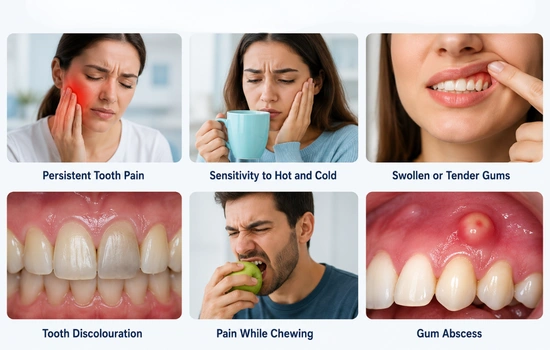
Recognising the early symptoms of an infected tooth can help you seek treatment before the condition becomes more serious.
Common signs include:
Persistent Tooth Pain
Ongoing tooth pain that doesn’t improve may indicate infection inside the tooth.
Sensitivity to Hot and Cold
If sensitivity continues even after removing hot or cold food and drinks, the dental pulp may be damaged.
Swollen or Tender Gums
Swelling around a tooth can be a sign of infection that requires professional treatment.
Tooth Discolouration
A tooth that appears darker than the surrounding teeth may indicate damage to the inner pulp.
Pain While Chewing
Pain when biting or chewing often suggests inflammation or infection inside the tooth.
Gum Abscess
A small pimple-like swelling on the gums may indicate an abscess caused by bacterial infection.
What Conditions Does Root Canal Treatment Treat?
Root canal treatment is recommended for a variety of dental conditions that affect the inner pulp of a tooth. By removing the infection and sealing the root canals, this procedure helps preserve the natural tooth, relieve pain, and prevent further complications. Here are some of the most common conditions treated with root canal therapy.
Infected Dental Pulp
When bacteria reach the dental pulp, they can cause inflammation and infection inside the tooth. Root canal treatment removes the infected tissue, disinfects the canals, and helps stop the infection from spreading.
Deep Tooth Decay
Untreated cavities can gradually penetrate the outer layers of the tooth and reach the pulp. When decay becomes severe, a root canal is often the best way to save the tooth and restore its function.
Dental Abscess
A dental abscess is a pocket of pus caused by a bacterial infection around the root of a tooth. Root canal treatment removes the source of the infection, promotes healing, and helps prevent damage to the surrounding bone and tissues.
Cracked or Fractured Teeth
Cracks or fractures can expose the pulp to bacteria, increasing the risk of infection. Depending on the severity of the damage, root canal treatment may be recommended to preserve the tooth and protect it from further complications.
Traumatic Dental Injuries
A tooth that has been damaged during a fall, sports injury, or accident may develop pulp damage, even if there are no visible cracks. Root canal treatment can help restore the tooth and prevent future infection.
Repeated Dental Procedures
Teeth that have undergone multiple fillings or other restorative procedures may become weakened over time. If the pulp becomes irritated or infected, root canal treatment may be necessary to maintain the tooth and relieve discomfort.
Treating these conditions early can help save your natural tooth, prevent the spread of infection, and maintain your overall oral health.
Root Canal Treatment Procedure: Step-by-Step
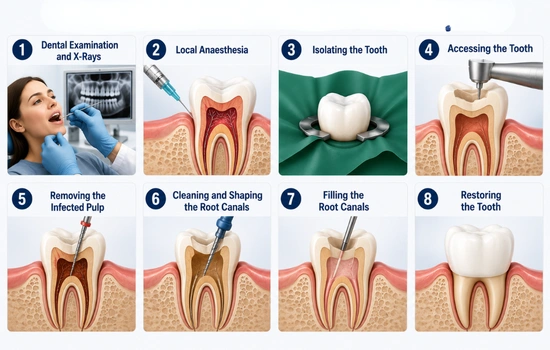
Many patients feel nervous because they are unsure what happens during a root canal procedure. Fortunately, modern dental techniques have made the treatment safe, comfortable, and highly effective. Here’s what you can expect during a typical root canal treatment.
Step 1: Dental Examination and X-Rays
Your dentist will examine the affected tooth and take digital X-rays to determine the extent of the infection and evaluate the condition of the root canals. This helps create a personalised treatment plan.
Step 2: Local Anaesthesia
A local anaesthetic is used to numb the area around the affected tooth, ensuring you remain comfortable throughout the procedure.
Step 3: Isolating the Tooth
A dental dam is placed around the tooth to keep it dry and free from saliva during treatment. This also helps prevent bacteria from entering the treatment area.
Step 4: Accessing the Tooth
A small opening is made in the top of the tooth to allow the dentist to reach the infected pulp inside the root canals.
Step 5: Removing the Infected Pulp
Using specialised dental instruments, the infected or damaged pulp is carefully removed from inside the tooth. This eliminates the source of pain and infection.
Step 6: Cleaning and Shaping the Root Canals
The empty canals are thoroughly cleaned, disinfected, and shaped to prepare them for sealing. This step helps reduce the risk of future infection.
Step 7: Filling the Root Canals
The cleaned canals are filled with a biocompatible material called gutta-percha. This seals the canals and protects the tooth from reinfection.
Step 8: Restoring the Tooth
A temporary or permanent filling is placed to close the opening. In many cases, your dentist may recommend a dental crown to strengthen and protect the treated tooth, especially if it has been significantly weakened.
Is Root Canal Treatment Painful?
One of the biggest misconceptions about root canal treatment is that it is painful. In reality, modern root canal procedures are designed to relieve pain not cause it. Thanks to local anaesthesia and advanced dental technology, most patients experience little to no discomfort during treatment.
After the procedure, it is normal to experience mild tenderness or sensitivity for a few days as the surrounding tissues heal. This discomfort is usually temporary and can be managed with prescribed or over-the-counter pain medication, as recommended by your dentist.
If you experience severe pain or swelling that continues for several days after treatment, contact your dentist for further evaluation.
How Long Does Root Canal Treatment Take?
The length of a root canal treatment depends on several factors, including the location of the tooth, the number of root canals, and the severity of the infection.
In many cases, treatment can be completed in one or two appointments, with each visit lasting approximately 60 to 90 minutes. More complex cases may require additional visits to ensure the infection is completely removed before the tooth is permanently restored.
Your dentist will explain your treatment plan and expected timeline based on your individual needs.
Recovery After Root Canal Treatment
Most patients recover quickly after root canal treatment and can return to their normal routine within a day. Mild discomfort, tenderness, or sensitivity is common during the first few days but usually improves as the tooth heals.
Following your dentist’s aftercare instructions is essential for promoting healing and protecting the treated tooth until the final restoration is completed.
Root Canal Recovery Timeline
| Recovery Period | What to Expect |
| First 24 Hours | Mild numbness after anaesthesia wears off, with slight tenderness around the treated tooth. |
| 2–3 Days | Minor discomfort while chewing may continue but should gradually improve. |
| One Week | Most pain and sensitivity have resolved, and normal daily activities can be resumed comfortably. |
| After Final Restoration | The tooth regains strength and functions like a natural tooth with proper care. |
Recovery Tips for Faster Healing
Following these simple aftercare tips can help promote healing and reduce the risk of complications.
- Avoid chewing hard or sticky foods on the treated tooth until your permanent restoration is complete.
- Brush and floss gently to keep your teeth and gums clean.
- Take any prescribed medications exactly as directed by your dentist.
- Avoid smoking or tobacco products, as they can slow the healing process.
- Attend all follow-up appointments to ensure the tooth is healing properly.
- If your dentist recommends a dental crown, have it placed as soon as possible to protect the treated tooth.
When Should You Contact Your Dentist?
Although recovery is usually straightforward, contact your dentist if you experience any of the following symptoms:
- Severe or worsening pain that does not improve after a few days.
- Swelling that continues to increase instead of decreasing.
- Fever or signs of infection.
- Persistent bleeding around the treated tooth.
- A loose temporary filling or crown.
- Difficulty biting or chewing after the initial healing period.
Early treatment can prevent further complications and improve the long-term success of your root canal treatment.
Benefits of Root Canal Treatment
Root canal treatment offers many advantages and is often the best option for saving a damaged or infected tooth.
- Preserves Your Natural Tooth: Helps maintain your natural smile and normal chewing function.
- Relieves Tooth Pain: Removes the infected pulp responsible for pain and discomfort.
- Prevents Infection from Spreading: Stops bacteria from affecting neighbouring teeth and surrounding tissues.
- Restores Normal Function: Allows you to eat, speak, and smile comfortably.
- Cost-Effective: Saving a natural tooth is often more affordable than replacing it with a bridge or dental implant.
- Supports Long-Term Oral Health: Preserving your natural tooth helps maintain proper tooth alignment and jaw function.
How to Prevent Needing a Root Canal Treatment
While root canal treatment is highly effective, preventing tooth decay and infection is always the best approach.
You can reduce your risk by:
- Brushing your teeth twice a day with fluoride toothpaste.
- Flossing daily to remove plaque between teeth.
- Limiting sugary foods and drinks.
- Wearing a mouthguard during contact sports.
- Visiting your dentist regularly for check-ups and professional cleanings.
- Treating cavities and damaged teeth as early as possible.
Healthy daily habits can help protect your teeth and reduce the likelihood of needing root canal treatment in the future.
Conclusion
Root canal treatment is a safe, effective, and reliable way to save a damaged or infected tooth while relieving pain and restoring your oral health. Modern techniques have made the procedure more comfortable than ever, allowing most patients to return to their normal routine quickly with minimal discomfort.
If you’re experiencing persistent tooth pain, sensitivity, or swelling, don’t ignore the symptoms. Seeking treatment early can help prevent further complications and increase the chances of saving your natural tooth. Book an appointment today to receive a professional evaluation and personalised treatment from our experienced dental team.