
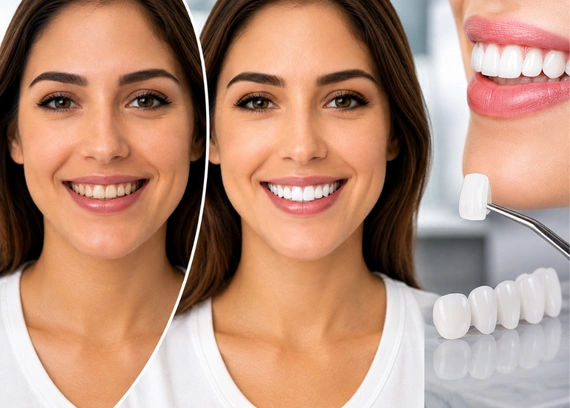
Your smile can influence how you feel about yourself and how confidently you interact with others. If you are unhappy with the colour, shape, spacing, alignment, or condition of your teeth, a smile makeover may offer a personalized way to improve your smile.
A smile makeover combines two or more dental treatments based on your individual needs and goals. Depending on your smile concerns, treatment may focus on appearance, function, or both. In this guide, we’ll explain what a smile makeover involves, the treatments that may be included, its benefits, how long it can take, and how to maintain your results.
What Is a Smile Makeover?
A smile makeover is a personalized treatment plan that combines two or more cosmetic or restorative dental procedures to improve the appearance and function of your smile. Rather than following a standard approach, your dentist considers your oral health, smile goals, and individual features when planning treatment.
A smile makeover may combine different treatments depending on what you want to improve. Some plans focus mainly on aesthetics, while others may also address damaged, missing, or worn teeth to improve function.
Depending on your needs, a smile makeover may address concerns such as:
- Tooth discolouration: Brighten stained or yellow teeth.
- Chipped or damaged teeth: Restore teeth affected by small chips, cracks, or wear.
- Gaps between teeth: Create a more even-looking smile.
- Crooked or misaligned teeth: Improve alignment with suitable orthodontic options.
- Uneven teeth: Improve tooth shape, size, and symmetry.
- Missing teeth: Restore the appearance and function of your smile with options such as dental implants.
- Uneven gum lines: Improve gum symmetry when appropriate.
- Old dental restorations: Replace worn or noticeable restorations with more natural-looking alternatives.
Which Dental Treatments Are Involved in Smile Makeover?
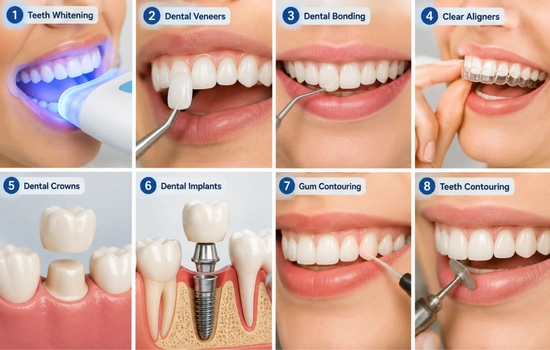
A smile makeover can involve different cosmetic and restorative treatments depending on what you want to improve. Your dentist will assess your teeth, gums, bite, and overall smile before creating a treatment plan suited to your needs.
1. Teeth Whitening
Professional teeth whitening can help brighten teeth affected by stains and discolouration. It is often suitable when tooth colour is one of the main concerns.
Key benefits:
- Creates a brighter-looking smile
- Helps reduce common surface stains
- Can complement other smile makeover treatments
2. Dental Veneers
Dental veneers are thin, custom-made restorations designed to improve the appearance of selected teeth. They can help with certain concerns related to tooth colour, shape, size, or minor imperfections.
Key benefits:
- Improves tooth shape and appearance
- Helps create a more even smile
- Can address several cosmetic concerns at once
3. Dental Bonding
Dental bonding uses a tooth-coloured material to improve minor imperfections such as small chips, gaps, cracks, or uneven edges. The material is carefully shaped and polished to blend naturally with the surrounding teeth.
Key benefits:
- Suitable for minor cosmetic changes
- Provides a natural-looking finish
- Usually requires minimal alteration to the tooth
4. Clear Aligners
Clear aligners can gradually move teeth into a more suitable position and may be included when mild to moderate alignment is part of the smile concern.
Key benefits:
- Less noticeable than traditional braces
- Removable for eating and oral hygiene
- Can improve certain alignment concerns
5. Dental Crowns
A dental crown covers and protects a damaged or weakened tooth while restoring its shape and appearance. Tooth-coloured crowns can be designed to blend with the surrounding teeth.
Key benefits:
- Restores damaged teeth
- Improves both appearance and function
- Provides protection for weakened teeth
6. Dental Implants
Dental implants can be used to replace missing teeth as part of a comprehensive smile makeover. They provide a stable foundation for a replacement tooth and can restore both appearance and function.
Key benefits:
- Replaces missing teeth
- Restores chewing function
- Provides a natural-looking result
7. Gum Contouring
Gum contouring reshapes uneven or excessive gum tissue to create a more balanced relationship between the gums and teeth. It may be considered when the gum line affects smile symmetry.
Key benefits:
- Creates a more balanced gum line
- Improves overall smile proportions
- Can complement other aesthetic treatments
8. Teeth Contouring
Teeth contouring involves carefully reshaping small areas of enamel to improve uneven edges or minor differences in tooth shape. It is generally considered for subtle cosmetic adjustments.
Key benefits:
- Refines uneven tooth edges
- Improves tooth symmetry
- Can enhance the overall appearance of the smile
Important: A smile makeover does not require every treatment listed above. Your dentist will recommend only the procedures that are appropriate for your oral health, smile concerns, and desired outcome.
What Are the Benefits of a Smile Makeover?
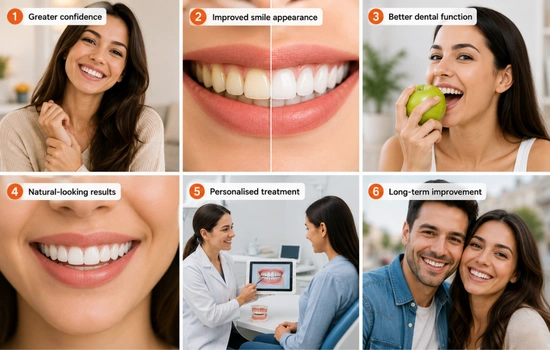
A smile makeover can improve more than the appearance of your teeth. By combining suitable cosmetic and restorative treatments, it can help create a smile that looks balanced while supporting comfortable function and good oral health.
- Greater confidence: Feeling happier with your smile can make you more comfortable when speaking, smiling, and socialising.
- Improved smile appearance: Treatments can address concerns such as stains, chips, gaps, uneven teeth, or an irregular gum line.
- Better dental function: Restorative treatments can help improve chewing and protect damaged or weakened teeth.
- Natural-looking results: Modern dental materials can be matched to your existing teeth for a balanced appearance.
- Personalised treatment: Your makeover can be planned around your specific concerns, goals, and oral health.
- Long-term improvement: With proper oral hygiene and regular dental visits, many smile makeover results can be maintained for years.
How Long Does a Smile Makeover Take?
The time required for a smile makeover varies from person to person because each treatment plan is different. Some procedures can be completed in a single visit, while treatments such as veneers, clear aligners, or dental implants may require several appointments and additional healing or adjustment time.
| Treatment | Typical Time |
| Teeth whitening | Often completed in one visit |
| Composite bonding | Usually one or a few appointments |
| Dental veneers | Often takes several visits over a few weeks |
| Clear aligners | Usually takes several months, depending on alignment |
| Dental implants | May take several months because healing is required |
Your dentist will provide a more accurate timeline after assessing your smile and deciding which treatments are suitable for you. Some treatments may also be completed in stages to ensure the best possible result.
How Is a Smile Makeover Planned?
A smile makeover starts with a detailed dental assessment rather than choosing treatments based only on appearance. Your dentist will look at your teeth, gums, bite, and overall smile to understand what needs to be improved and which treatments are suitable.
The planning process may include:
- Discussing your goals: You can explain what you like or dislike about your current smile and what you hope to change.
- Assessing your oral health: Your teeth and gums are checked to identify any problems that should be treated first.
- Evaluating your smile: Tooth shape, colour, alignment, gum line, and overall proportions may be considered when planning your treatment.
- Choosing suitable treatments: Your dentist may recommend one procedure or a combination of treatments based on your needs.
- Creating a personalised plan: The treatments, order, appointments, and expected timeline can then be planned around your individual goals.
A personalised approach helps ensure that the final result complements your natural features while also considering comfort, function, and oral health.
How to Maintain Your Smile After a Makeover
Taking care of your teeth after a smile makeover is important for keeping your results looking their best. Good daily habits and regular dental care can also help protect your natural teeth and dental restorations.
To maintain your smile:
- Brush twice a day: Use a soft-bristled toothbrush and fluoride toothpaste.
- Floss daily: Clean carefully between your teeth and around any dental restorations.
- Limit staining foods and drinks: Reduce frequent consumption of coffee, tea, red wine, and other foods that may stain teeth.
- Avoid hard or sticky foods: These can damage certain restorations or put unnecessary pressure on your teeth.
- Don’t use your teeth as tools: Avoid biting pens, opening packages, or chewing other hard objects.
- Attend regular dental check-ups: Routine examinations and professional cleaning help maintain your oral health and smile results.
- Follow your dentist’s advice: If you grind your teeth or have specific dental restorations, your dentist may recommend additional protection such as a night guard.
With consistent care and regular professional monitoring, you can help maintain the appearance, function, and health of your smile for years to come.
How to Choose the Right Dentist for a Smile Makeover
Choosing the right dentist is an important part of achieving a safe and natural-looking smile makeover. Look for a dental professional who understands your goals, offers suitable treatment options, and takes a personalised approach to planning your smile.
- Experience: Look for experience in cosmetic and restorative dental treatments.
- Personalised planning: Your dentist should assess your smile and create a treatment plan based on your individual needs.
- Modern technology: Digital imaging and other dental technologies can support accurate treatment planning.
- Clear communication: Choose a dentist who explains your treatment options, expected results, costs, and timeline clearly.
- Patient reviews: Reviews and testimonials can provide insight into other patients’ experiences.
- Safety and hygiene: Make sure the clinic follows appropriate infection-control and sterilisation practices.
A consultation is the best way to discuss your goals and understand which smile makeover options may be suitable for you.
Frequently Asked Questions About Smile Makeovers
1. What is included in a smile makeover?
A smile makeover may combine treatments such as teeth whitening, veneers, bonding, clear aligners, crowns, or dental implants, depending on your individual needs.
2. Is a smile makeover suitable for everyone?
Most people with healthy teeth and gums may be suitable. Your dentist will assess your oral health and smile goals before recommending treatment.
3. How long does a smile makeover take?
The timeline depends on the treatments involved. Some procedures may take one visit, while others can take several weeks or months.
4. How long do smile makeover results last?
Results can last for many years with good oral hygiene, regular dental check-ups, and proper care of your teeth and restorations.
Conclusion
A smile makeover can be a personalized way to improve the appearance, function, and overall balance of your smile. From teeth whitening and veneers to bonding, aligners, crowns, or implants, the right combination of treatments depends on your individual dental needs and goals.
If you’re considering a smile makeover, book an appointment with our dental team to discuss your concerns and explore the most suitable options for you. A personalized treatment plan can help you achieve a smile that looks natural, feels comfortable, and supports your long-term oral health.