
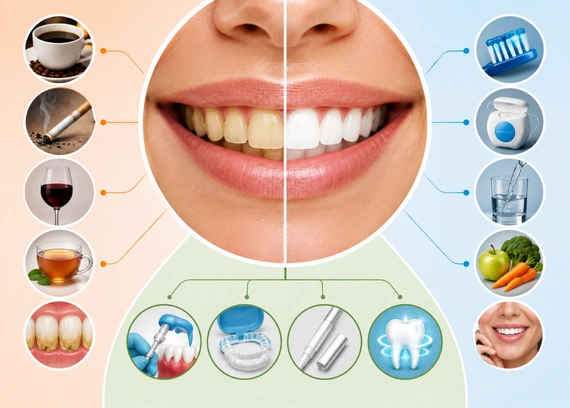
Many people feel self conscious when they notice their smile looking dull or discoloured. Whether it is in photos, social situations, or professional settings, yellow teeth can affect confidence and make people hesitant to smile freely. It is common to assume that yellow teeth are always caused by poor brushing, but that is not always the case.
In reality, yellow teeth can develop for many different reasons, including coffee and tea consumption, smoking, ageing, plaque buildup, certain medications, and natural enamel wear. Some causes are related to daily habits, while others may occur even when you follow a good oral care routine. Understanding what causes yellow teeth is the first step towards finding the right solution and maintaining a healthier, brighter smile.
What Are Yellow Teeth?
Yellow teeth refer to teeth that appear darker, stained, or more yellow than their natural shade. While many people associate yellow teeth with poor oral hygiene, the colour of your teeth is not always a sign that something is wrong. Teeth naturally come in different shades, and not everyone has perfectly white teeth.
The appearance of your teeth is influenced by both the outer and inner layers of the tooth. The outer layer, known as enamel, is naturally white and slightly translucent. Beneath the enamel is a layer called dentin, which has a naturally yellow colour. When enamel becomes thinner due to ageing, wear, or other factors, the yellow dentin underneath can become more visible.
- Natural Tooth Shade: Some people naturally have teeth that appear more yellow or cream coloured than others. This is completely normal and is often influenced by genetics.
- Enamel and Dentin: The thickness of your enamel affects how white your teeth look. Thinner enamel allows more of the yellow dentin underneath to show through.
- Surface Stains: Stains that develop on the outer surface of the teeth are commonly caused by coffee, tea, red wine, smoking, and certain foods. These stains can gradually make teeth appear yellow.
- Internal Discolouration: In some cases, the colour change happens inside the tooth rather than on the surface. This may be related to ageing, medications, injury, or changes within the tooth structure.
Yellow teeth can be caused by natural tooth colour, staining, enamel wear, or changes within the tooth itself.
Common Causes of Yellow Teeth
Understanding what causes yellow teeth can help you identify the reason behind the colour change and take the right steps to improve your smile.
Food and Drink Stains
Many foods and beverages contain pigments that can stick to the surface of the teeth and cause staining over time. Frequent consumption of these items can gradually make teeth appear yellow or dull.
Common stain causing foods and drinks include:
- Coffee: Dark pigments in coffee can attach to the enamel and leave visible stains over time.
- Tea: Tea contains tannins that can contribute to tooth discoloration, especially when consumed regularly.
- Red Wine: The deep colour and acidity of red wine can increase the risk of staining.
- Soft Drinks: Many soft drinks contain artificial colouring and acids that can affect the appearance of teeth.
Reducing frequent exposure to these beverages and rinsing your mouth with water afterwards may help minimise staining.
Smoking and Tobacco Use
Smoking and tobacco use are among the most common causes of yellow teeth. Tobacco contains substances such as nicotine and tar that can leave stubborn stains on the tooth surface.
Effects of tobacco use include:
- Yellow or brown stains on teeth
- Long term tooth discoloration
- Increased plaque buildup
- Higher risk of gum disease
The longer tobacco products are used, the more difficult the stains can become to remove.
Poor Oral Hygiene
Not brushing and flossing regularly can allow plaque and bacteria to build up on the teeth. Over time, this buildup can make teeth appear yellow and affect overall oral health.
Common oral hygiene related causes include:
- Plaque accumulation
- Tartar buildup
- Food debris on teeth
- Inadequate brushing habits
Maintaining a consistent oral care routine can help reduce staining and keep teeth looking cleaner.
Ageing
As we age, the outer enamel layer naturally becomes thinner. When this happens, the yellow dentin underneath becomes more visible, making teeth appear darker than before.
Age related changes may include:
- Natural enamel wear
- Increased tooth discoloration
- Greater visibility of dentin
- Reduced brightness of teeth
This process is a normal part of ageing and can occur even in people who maintain good oral hygiene.
Enamel Wear
Enamel is the protective outer layer of the tooth. When enamel becomes thinner because of ageing, acidic foods, teeth grinding, or aggressive brushing, the darker dentin underneath becomes more visible.
Factors that may contribute to enamel wear include:
- Acidic foods and drinks
- Teeth grinding
- Brushing too hard
- Acid reflux
- Age related enamel loss
Protecting enamel is important because once it wears away, it cannot naturally grow back.
Understanding the cause is the first step towards choosing the most suitable treatment and maintaining a healthier, brighter smile.
Signs That Yellow Teeth May Need Professional Attention
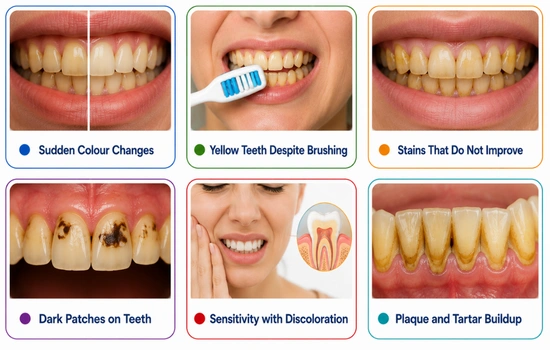
If your teeth continue to appear yellow despite good oral hygiene, or if the discoloration is accompanied by other symptoms, it may be time to consult a dentist.
- Sudden Colour Changes: If your teeth become noticeably darker or more yellow within a short period, it may indicate an underlying dental or health related issue.
- Yellow Teeth Despite Brushing: If regular brushing and flossing do not improve the appearance of your teeth, the discoloration may be deeper than surface stains.
- Stains That Do Not Improve: Stubborn stains that remain even after using whitening toothpaste or improving oral hygiene may require professional treatment.
- Dark Patches on Teeth: Brown, grey, or dark spots on the teeth should not be ignored, as they may be linked to tooth decay, enamel damage, or internal discoloration.
- Sensitivity with Discoloration: If yellow teeth are accompanied by sensitivity to hot, cold, or sweet foods, it may indicate enamel wear or exposed dentin.
- Plaque and Tartar Buildup: Yellow deposits near the gum line may be caused by plaque or tartar accumulation that cannot be removed through normal brushing alone.
Not all tooth discoloration is harmless. Professional evaluation can identify the cause, recommend the right treatment, and help maintain healthier, brighter looking teeth.
Can Yellow Teeth Be Prevented?
Prevention focuses on reducing plaque buildup, limiting exposure to stain causing substances, and maintaining good oral hygiene. Consistent care can make a noticeable difference over time.
- Maintain Good Oral Hygiene: Keeping your teeth and gums clean helps reduce plaque, bacteria, and surface stains that can contribute to discoloration.
- Brush Regularly: Brush your teeth twice a day using fluoride toothpaste to remove food particles, plaque, and stain causing substances from the tooth surface.
- Floss Daily: Flossing helps clean between the teeth where a toothbrush cannot reach, preventing plaque buildup and supporting overall oral health.
- Drink Water After Meals: Rinsing your mouth with water after eating or drinking can help wash away food particles and reduce staining from coloured foods and beverages.
- Limit Stain Causing Foods and Drinks: Coffee, tea, red wine, soft drinks, and certain foods can gradually stain teeth. Reducing how often you consume them may help keep teeth looking brighter.
- Avoid Tobacco Products: Smoking and tobacco use are major causes of yellow and stained teeth. Avoiding tobacco can help maintain a cleaner smile and improve overall oral health.
Good oral hygiene, healthy lifestyle choices, and regular dental care can help reduce the risk of yellow teeth and keep your smile looking its best.
Professional Treatment Options for Yellow Teeth
A dentist can assess the cause of the discoloration and recommend the most suitable treatment based on your teeth, oral health, and desired outcome.
Professional Teeth Whitening
Professional teeth whitening is one of the most effective treatments for improving the appearance of yellow teeth. It helps remove stubborn stains that have built up over time and can brighten teeth more effectively than many over the counter products.
Benefits of professional whitening include:
- Removes deep surface stains
- Provides faster results
- Performed under professional supervision
- Helps improve smile appearance
If you are looking to brighten stained or discoloured teeth, professional Teeth Whitening may help achieve a cleaner and brighter smile.
Professional Dental Cleaning
Plaque and tartar buildup can contribute to yellow teeth and make them appear dull. Professional cleaning helps remove these deposits from areas that regular brushing may miss.
Benefits of professional cleaning include:
- Removes plaque buildup
- Eliminates tartar deposits
- Improves overall tooth appearance
- Supports healthier gums
Regular professional cleaning and preventive care can help maintain cleaner teeth and reduce future staining.
Oral Examination
Not all tooth discoloration is caused by surface stains. In some cases, yellow teeth may be linked to enamel wear, dental conditions, or changes within the tooth structure.
An Oral Health Checkup can help:
Identify the cause of discoloration
Assess enamel health
Detect plaque or tartar buildup
Rule out underlying dental concerns
Recommend suitable treatment options
A proper examination helps ensure that the treatment addresses the actual cause rather than just the visible symptoms.
Whether the discoloration is caused by staining, plaque buildup, or another dental concern, professional care can help improve the appearance and health of your smile.
When Should You See a Dentist for Yellow Teeth?
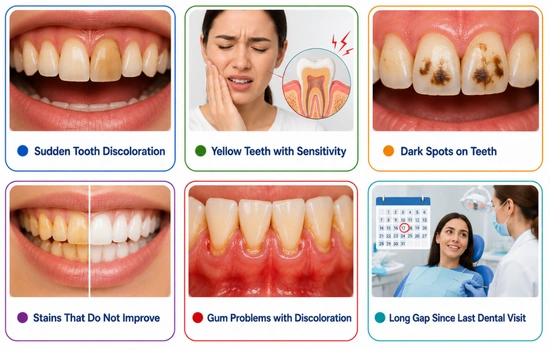
Early assessment can help identify the cause and prevent potential dental problems from becoming worse.
- Sudden Tooth Discoloration: If your teeth become noticeably yellow or darker within a short period, it may indicate a dental or health related concern.
- Yellow Teeth with Sensitivity: Discoloration combined with sensitivity to hot, cold, or sweet foods may be a sign of enamel wear or exposed dentin.
- Dark Spots on Teeth: Brown, grey, or black patches on the teeth may be linked to tooth decay, staining, or damage that requires professional evaluation.
- Stains That Do Not Improve: If stains remain even after improving your oral hygiene routine, professional treatment may be needed.
- Gum Problems with Discoloration: Yellow teeth along with swollen, bleeding, or receding gums may indicate plaque buildup or gum disease.
- Long Gap Since Last Dental Visit: If you have not had a dental examination in a long time, it is worth having your teeth checked to identify any hidden issues.
Early evaluation can help protect your teeth, improve your smile, and prevent more serious dental problems in the future.
Conclusion
Yellow teeth can develop for many reasons, including food and drink stains, smoking, poor oral hygiene, ageing, plaque buildup, and enamel wear. While some discoloration is a natural part of life, it is important not to ignore noticeable changes in the appearance of your teeth. Understanding the cause is the first step towards choosing the right solution and maintaining a healthier smile.
Good oral hygiene, healthy lifestyle habits, and regular dental care can help prevent many causes of tooth discoloration. However, some stains and colour changes may require professional treatment for the best results. If you are concerned about yellow teeth or would like advice on improving your smile, contact Sandringham Dental today to discuss suitable treatment options and make an appointment for a healthier, brighter smile.